Researched and written by Mike Shertz, MD/18D, not AI 🕖 Reading Time, 2 minutes We posted recently asking the question whether traction splints are worth the weight and cube. One question that came up repeatedly was: Is the dogma correct …

The easy to remember mnemonic MARCH reminds us of the priorities in treating casualties during TECC and TCCC situations. MARCH provides a framework to address immediate life threats and gives an organized approach to begin a casualty evaluation. The MARCH mnemonic is preferable to the ABCDE model because it takes into consideration the reason you need an airway and to be breathing is to circulate blood to the casualty’s brain. Recognizing that, the first step in our casualty evaluation should be to look for massive hemorrhage.
Once past massive hemorrhage, A-R-C is loosely approximated by A-B-C. H- is a reminder that a large number of traumatic casualties arrive at the emergency department or medical treatment facility hypothermic which dramatically increases their death rate.
The MARCH mnemonic can be applied to any patient, as the initial casualty evaluation usually rules out massive hemorrhage.
Researched and written by Mike Shertz, MD/18D, not AI 🕖 Reading Time, 2 minutes We posted recently asking the question whether traction splints are worth the weight and cube. One question that came up repeatedly was: Is the dogma correct …
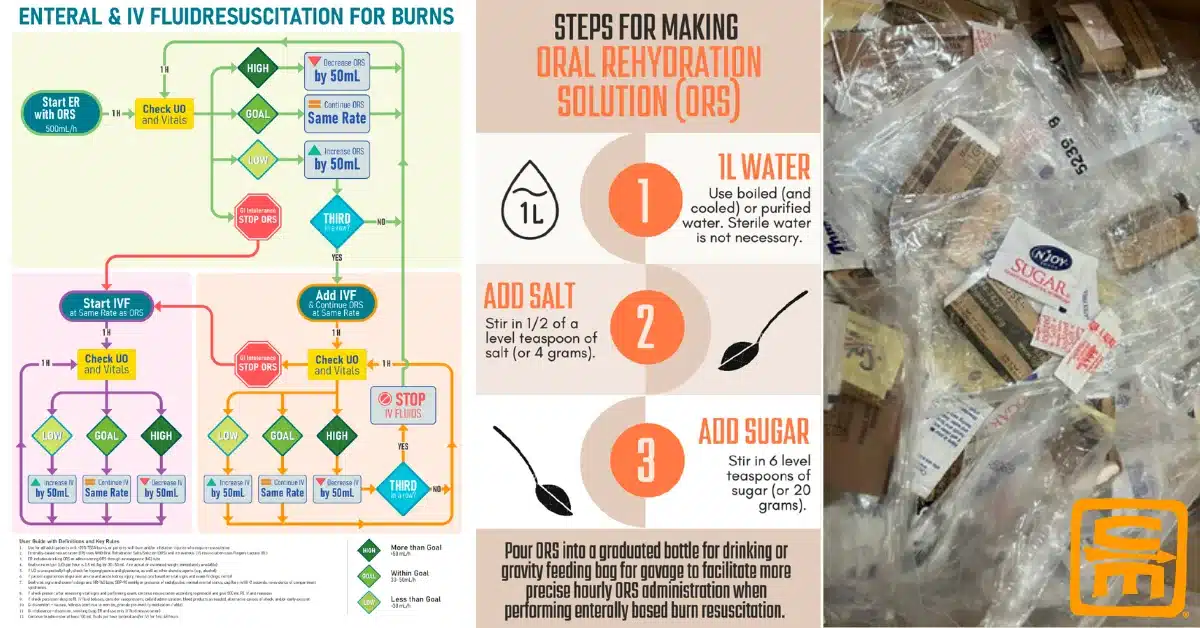
The US Joint Trauma System Clinical Practice Guideline on Burn Care, published June 10, 2025, now includes enteral resuscitation, meaning oral or nasogastric (NG) tube fluids, for burn casualties when IV fluid isn’t available in the quantities required. Not Every …
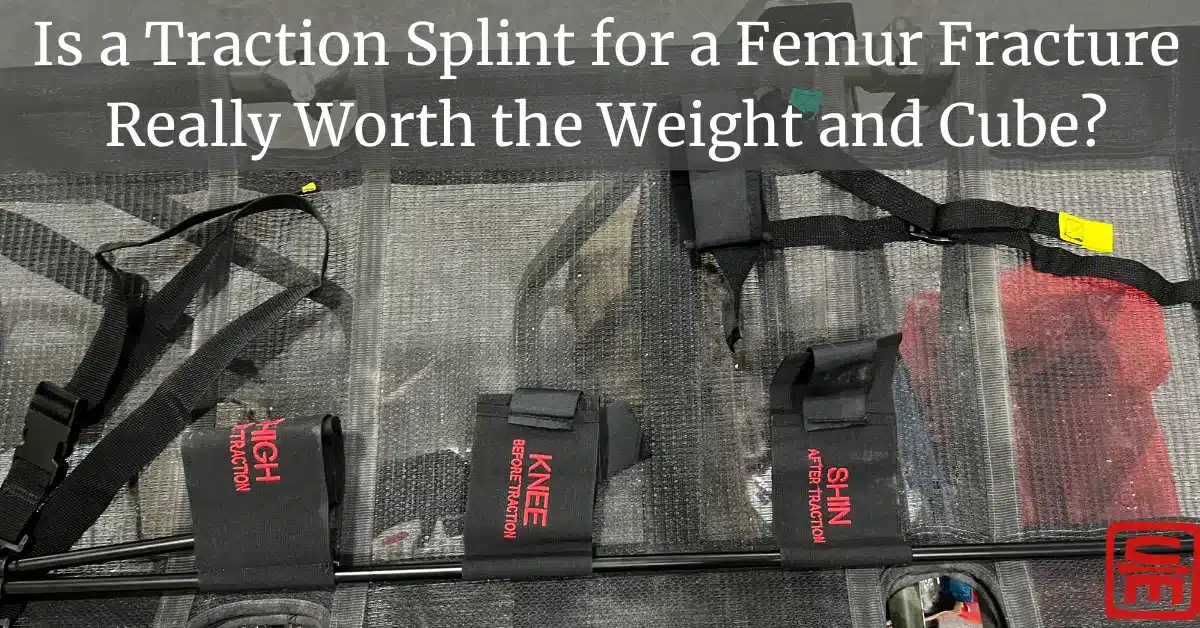
BLUF: In a fixed medical facility, keeping a traction splint on hand is reasonable. In a rucksack or aid bag, the evidence does not support carrying one. Most femur fracture casualties have other injuries that contraindicate traction splint use anyway. …
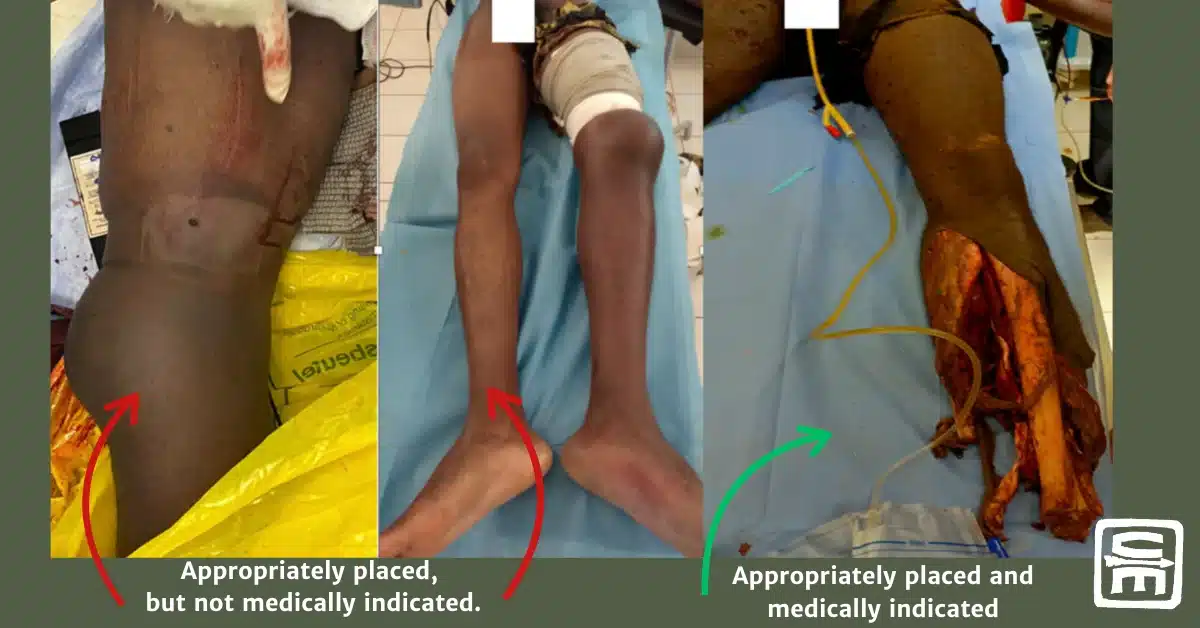
Only 5.3% of tourniquets placed by national military forces in Burkina Faso were both medically necessary and appropriately placed. 50% of all their amputations were a byproduct of unnecessary tourniquets. Researched and written by Mike Shertz, MD/18D, not AI 🕖 …
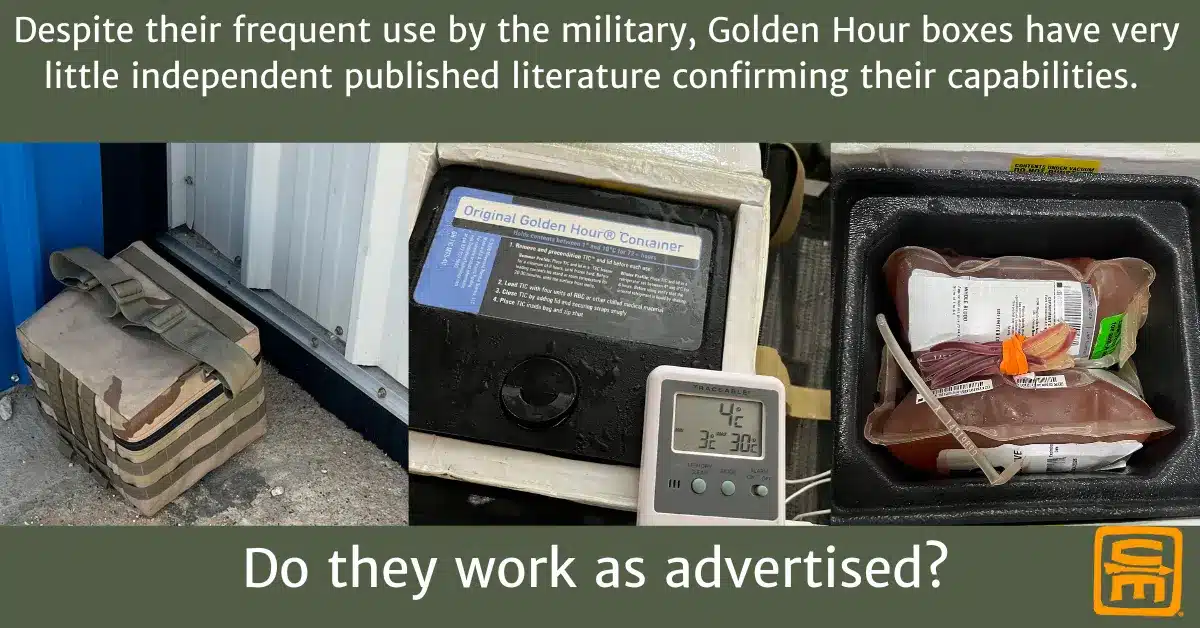
Despite their frequent use by the military, “golden hour boxes“ have little independent published literature confirming their capabilities. 🕖 Reading Time, 4 minutes Researched and written by Mike Shertz, MD/18D, not AI These easily portable boxes will generally maintain two …
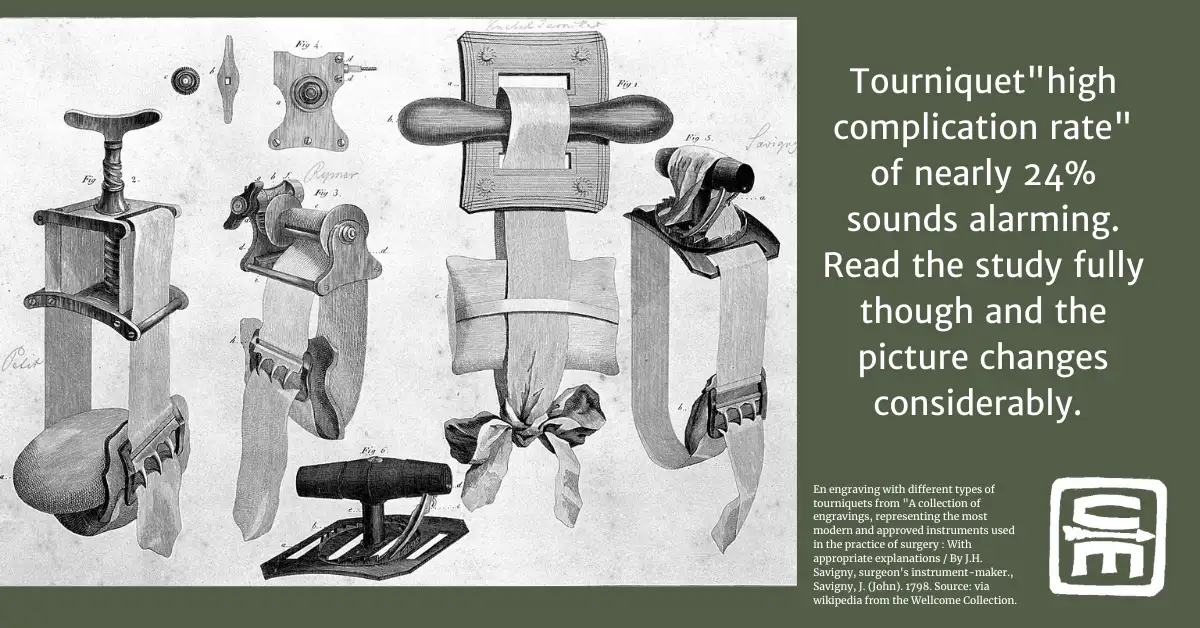
Researched and written by Mike Shertz, MD/18D, not AI 🕖 Reading Time, 5 minutes A retrospective study at Israel’s largest Level 1 trauma center reviewed 84 adult casualties who received prehospital tourniquets between 2010 and 2020. The goal: identify tourniquet-related …