
The Story Behind the Image
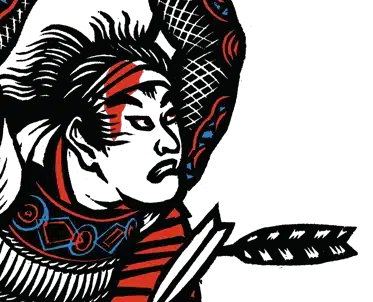
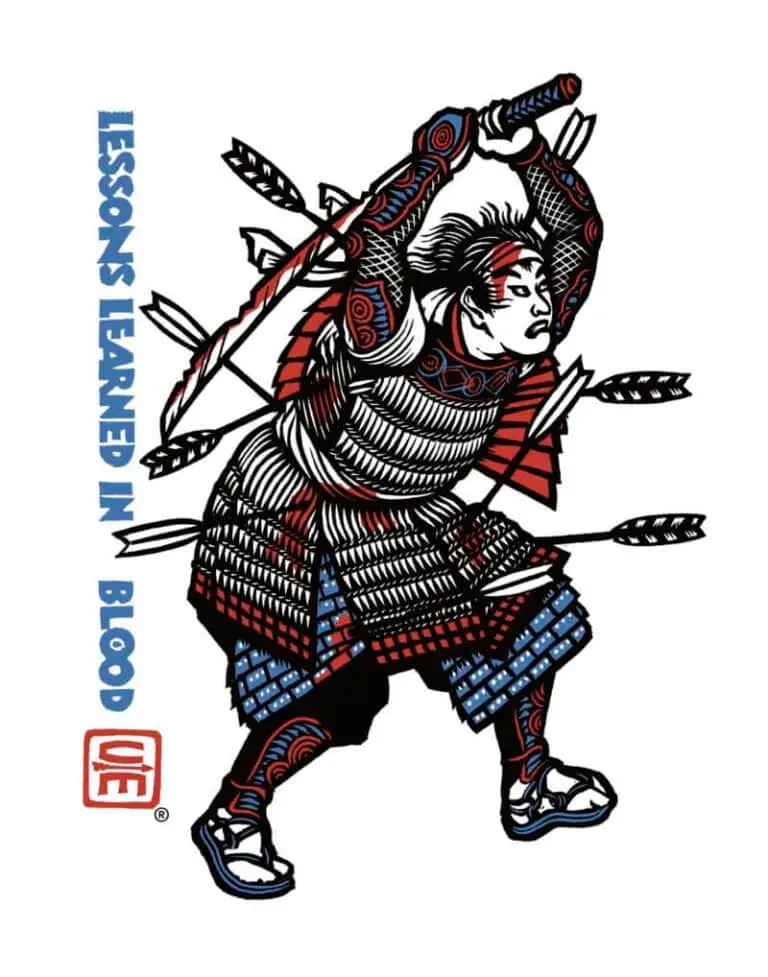
Every Crisis Medicine course includes a reference to the same image: a single warrior, mid-motion, shot through with arrows, his broken and bloodied sword still raised. He is not falling, he is not finished, he fights on. He continues the mission.
This image explains more about what Crisis Medicine believes and trains than any bio can.
The Artist and the Samurai
The original image was drawn by Utagawa Kuniyoshi (1797-1861) one of the last great masters of the Japanese ukiyo-e style of woodblock prints and painting. Although he depicted a broad range of subjects, he was most famous for his depictions of the battles of samurai and legendary heroes.
Why This Print
That's not a metaphor or marketing line Crisis Medicine reaches for once and drops. It's the same standard the curriculum is built on: stay effective despite the situation not improving and continue the mission.
How the Print Became the Crisis Medicine Mark
The connection runs deeper than the image alone. When Crisis Medicine incorporated and expanded our training business in 2011, this print went directly to the designer who built our logos.
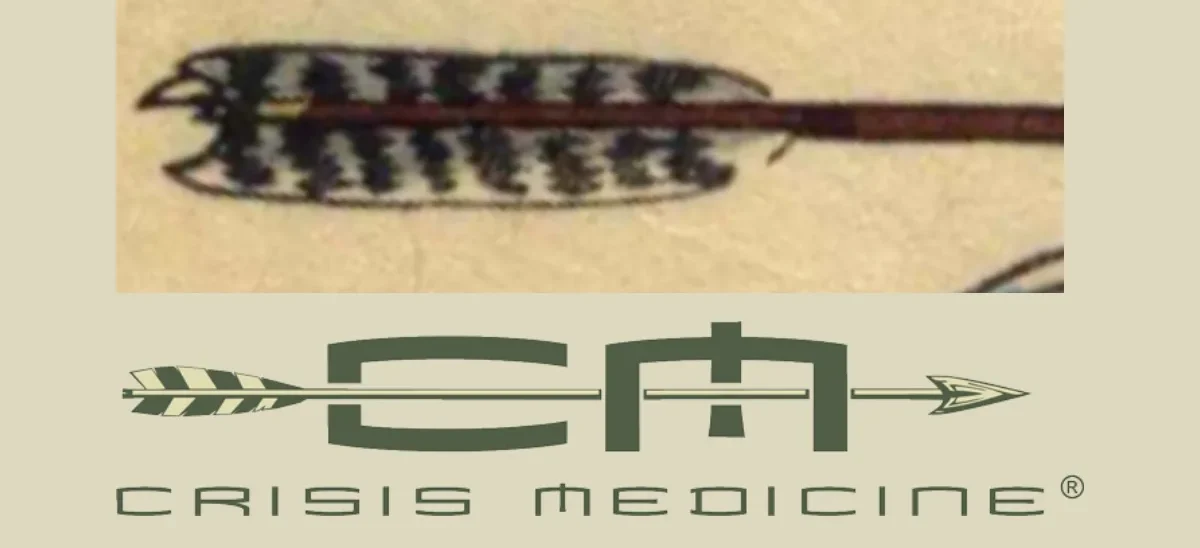
Two things came out of that collaboration: The arrow in the Crisis Medicine mark is not a generic tactical symbol, it is the same arrow, fletching and all, that strikes Ishikawa in the hip in the original print. Arrows have always played a significant role in the US Army Special Forces crest as well, referencing both US Army Indian scouts and 1st Special Service Force during WWII. It remains a part of our Green Beret imagery today.
What Lessons Learned in Blood Means
I learned in Army Special Forces that all lessons are learned in blood.
This print demonstrates what that means.
Ishikawa Kazumitsu died at Shizugatake in 1583. His command recorded what he did and paid his family for it. The record survived. Two and a half centuries later a working Edo writer named Ryūkatei Tanekazu wrote about it for a print series, and Kuniyoshi drew it. In 2011 that image went to our designer and became this company’s mark. Today it frames the Wound Ballistics and Combat Mindset block in every course we teach.
The man did not survive. What he demonstrated did.
That is the whole teaching point and it is the same one behind the TCCC and TECC guidelines. The guidelines are not just opinion and they are not consensus for its own sake. They are the accumulated cost of casualties who did not make it, analyzed and written down so that the people who come after get to stand on their shoulders, understanding the lessons instead of paying for them again.
Footnote & References
1Varshavskaya 2005, p. 132 (entry no. 37). Cultural Japan, British Museum series listing for Taiheiki eiyuden: https://cultural.jp/en/item/britishm-A_2008-3037-05613>Lyon Collection, object 1141.
2Reportedly, Sadatomo fought on the front line of the spearmen and contributed on a par with the group known as the “Seven Spears of Shizugatake.” The Seven Spears are the famous honor roll from that battle. He fought at their level but is not on the list, which is what tends to happen when you die during the engagement.