Researched and written by Mike Shertz, MD/18D, not AI
🕖 Reading Time, 2 minutes
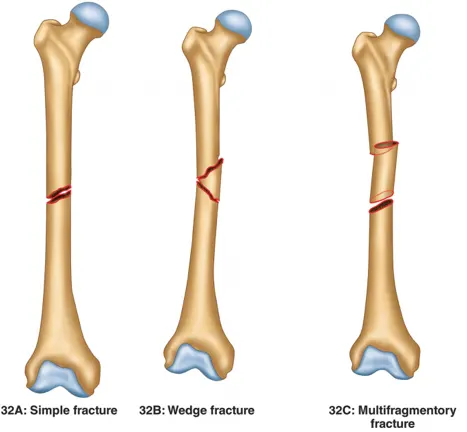
We posted recently asking the question whether traction splints are worth the weight and cube. One question that came up repeatedly was: Is the dogma correct that femur fractures can cause life threatening bleeding?
A 1992 Study Combined Four Measures to Estimate Blood Loss
With the large size of the femoral bone, surrounding large muscles, and vasculature, even isolated fractures of the femoral shaft have historically been estimated to be associated with blood loss of 1 to 2 liters. Where did that volume come from?
In 1992, using data collected from 1985 to 1990, a study of 53 patients with those fractures seen at the University of Arizona medical center was conducted. Estimated patient blood volume, serial hematocrits, orthostatic vital sign changes, and estimated blood loss during surgery were all used to generate a suspected total blood loss associated with the fracture.1
Patients Lost Only 741 mL Before Surgery
Though the authors felt mean total estimated blood loss was 1200 ml, patients only lost a mean of 741 mL “before surgery.” The average delay between ED arrival and definitive surgery for the fracture was 25 hours. The remaining blood loss, mean 472 mls, occurred during surgery.1
Large Volume Crystalloid Made the 1992 Hematocrits Less Reliable
Additionally, this was the era of large volume IV fluid administration which is known to cause coagulopathy (increasing bleeding) and red blood cell dilution (resulting in hematocrit decreases disproportionate to lost blood), which affects serial hematocrits, making them less reliable. In the period before surgery patients received between 1.8 to 3 liters of crystalloids. 1
This is a small and fairly old dataset with results based on a lot of assumptions.
Do we have anything more recent?
A 2025 Study of 540 Patients Used Hemoglobin Instead
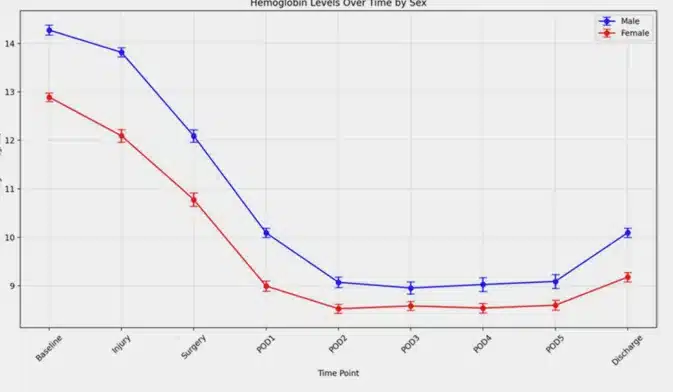
In 2025, a retrospective cohort study of 540 patients with isolated femoral shaft fractures seen at a Midwestern US level 1 trauma center was conducted to determine associated blood loss. They used patient data from 2017 to 2024. In this study hemoglobin, not hematocrit, was used. Hemoglobin is the amount of oxygen carrying protein in blood and less significantly changed by IV fluid dilution, unlike hematocrits. Loosely, a one gram drop in hemoglobin correlates to about 1 unit of packed red blood cells lost.2
Hemoglobin Fell Most After Surgery, Not Before It
Following femur fractures hemoglobin levels decreased 0.5 grams in males and 1 gram in females.2 At time of surgery (within 24 hours), hemoglobin levels had decreased further to 2.2 grams and 2.3 grams respectively.2 Postoperatively, hemoglobin levels declined even more attributable to surgical loses. The most substantial hemoglobin drops occurred between post operative days 1 and 2. 2 Is any of this a prehospital problem?
More an Orthopedic and Prolonged Field Care Problem Than a Prehospital One
Ok, what does this mean to me? Isolated femoral shaft fractures are associated with about ½ to slightly over 1 liter of blood loss before surgery, which is over the first 24 hours, across both studies with a combined data set of almost 600 patients. Though a femur fracture can result in substantial blood loss, it seems to really be an orthopedic surgeon / post op / prolonged field care problem based on when it occurs, not a common one for prehospital providers.
A Hypotensive Casualty With a Femur Fracture Is More Likely Bleeding Elsewhere
This data also tells me if you have a hypotensive casualty with a femoral shaft fracture, it seems more likely they are hypotensive from other injuries rather than an isolated femur fracture. NAEMSP agrees with this position.3 This is similar to data showing isolated pelvic fractures infrequently being the cause of shock, at least in otherwise healthily IDF soldiers.4
References
1Lieurance R, Benjamin JB, Rappaport WD. Blood loss and transfusion in patients with isolated femur fractures. J Orthop Trauma. 1992;6(2):175-9.
2O’Sullivan L, Nasta S, Whitaker J, Rashid S, Zamora R. Hemoglobin trends and transfusion risk in isolated femoral shaft fractures: a multi-year retrospective analysis. Eur J Orthop Surg Traumatol. 2025 Jul 20;35(1):310
3Lyng JW, Corsa JG, Nawrocki PS, Raetzke BD, Nackenson J, Bosson N. Prehospital Trauma Compendium: Management of Suspected Femoral Shaft Fractures – A Position Statement and Resource Document of NAEMSP. Prehosp Emerg Care. 2025 May 29:1-16.
4Gottfried A, Gendler S, Chayen D, Radomislensky I, Mitchnik IY; Israel Trauma Group; Epshtein E, Tsur AM, Almog O, Talmy T. Hemorrhagic Shock in Isolated and Non-Isolated Pelvic Fractures: A Registries-Based Study. Prehosp Emerg Care. 2024;28(4):589-597.