Researched and written by Mike Shertz, MD/18D, not AI
🕖 Reading Time, 5 minutes
A retrospective study at Israel’s largest Level 1 trauma center reviewed 84 adult casualties who received prehospital tourniquets between 2010 and 2020. The goal: identify tourniquet-related complications and contributing risk factors.
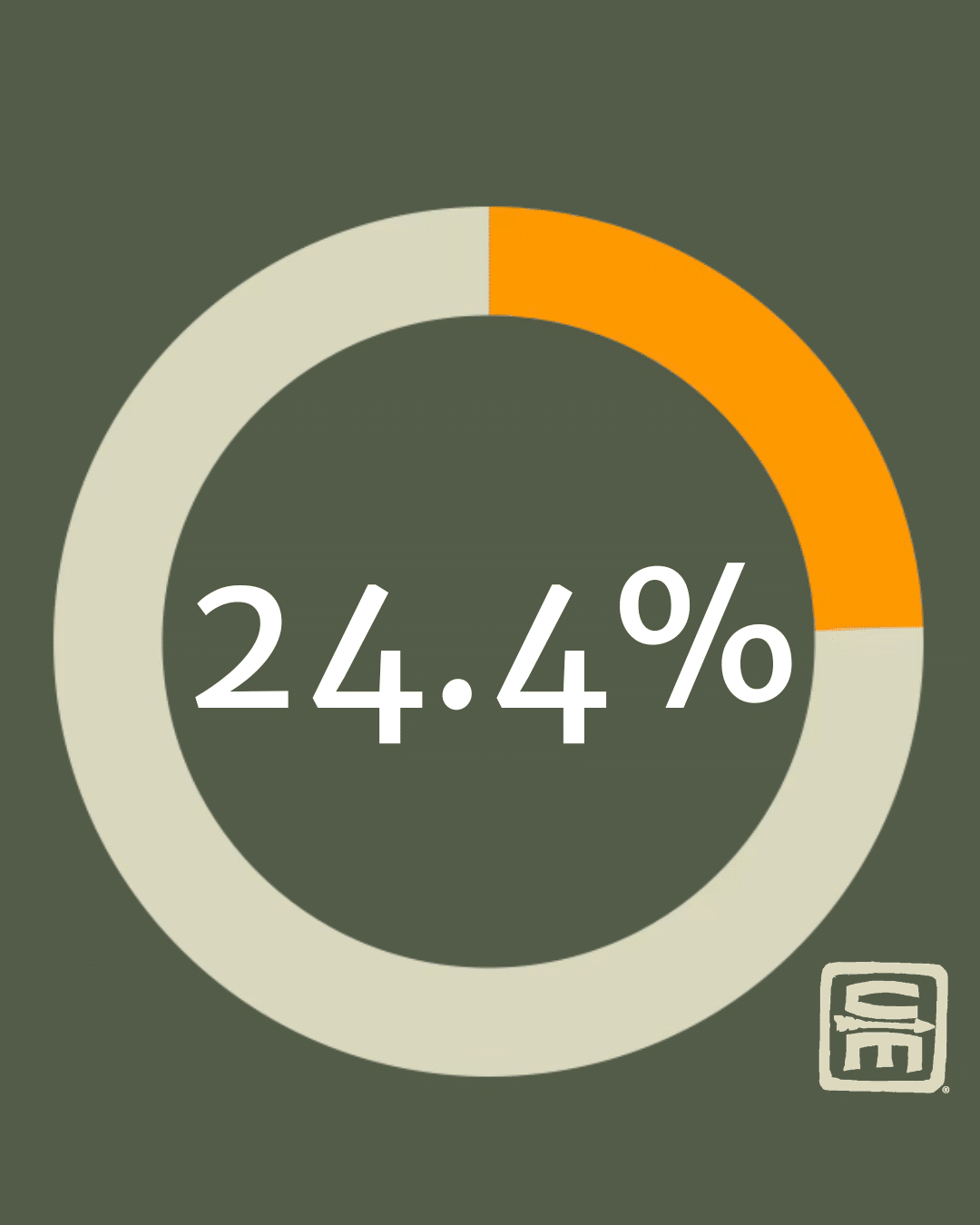
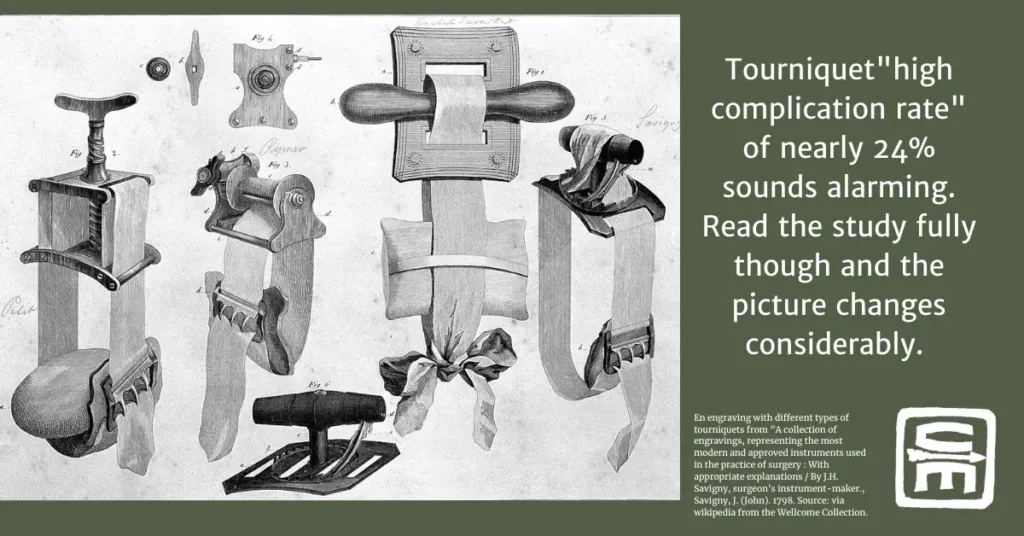
The authors flagged a “high complication rate” of nearly 24%. At first pass, that sounds alarming. Read the study fully though and the picture changes considerably.1
Complications were divided into early, occurring within hours to days after tourniquet application, or late.
Tourniquet Time Was Short, and No Different Between Groups
There was no difference in duration of tourniquet application between those with or without complications. Overall, the mean tourniquet time was fairly short: 41 to 43 minutes across both groups. The average tourniquet duration from the Global War on Terror (GWOT) data was 60 to 70 minutes. 2
In a different civilian US study from USC, South Central Los Angeles, one of the biggest trauma centers in the US, the mean tourniquet time was 103 minutes. 3
Nor was there a difference in the Israel study between effectiveness or appropriateness of tourniquet placement in the complication or non-complication group.
In the complication group, the leading indication for tourniquet placement was traumatic amputation (45% of those casualties). Another 20% had multiple injuries in the same limb. In the non-complication group, the primary indication for placement was massive hemorrhage (41%) followed by traumatic amputation in 20% of cases.
Where the Tourniquets Went: An Unusual Pattern
Unusually, 71% of tourniquets were placed on the upper extremity. Half of all tqts were ultimately positioned at wrist level. This is very unusual and not consistent with literature from the GWOT. In a retrospective study from Iraq, of 499 casualties treated at a Combat Support Hospital, only 27% of tourniquets were placed on the upper extremity. Sixty seven percent of all tourniquets placed in that study were on thighs, which makes sense. 4
Hemorrhage control on an upper extremity is generally quite easy based on the smaller limb size and decreased muscle mass compared to a thigh. The major arteries and veins just aren’t that deep.
The Complications Themselves: Mostly Infections in Dirty Wounds
Early complications, occurring in hours to days after injury were twice as frequent as late complications.
They also noted the most common complication was a local wound infection, occurring in 55% of all patients with complications (or 13% of all casualties overall). Is this really surprising with “grossly contaminated wounds,” present in 100% of the patients with complications? This was defined as heavy environmental contamination, often involving dirt, debris, and organic material. The more contaminated a wound, the higher the likelihood of infection.
Additionally, they commented that all of these wound infections were treated with “a short course of antibiotics and resolved within days.” In the scheme of trauma, this just doesn’t seem surprising or a big deal.
Compartment Syndrome, PE, and DVT: Rare Findings, Not Unusual Ones
There were also three cases of compartment syndrome. Only 1 of the 3 required fasciotomy. There were 2 cases of pulmonary embolism (PE) and 2 deep vein thrombosis in the injured limb. This represents a 2.3% rate of PE. This is not an unusual statistic among trauma patients in general.
The Missing Control Arm
The authors acknowledge a limitation of their study is the lack of a “control arm” of similar trauma patients who didn’t have tourniquets applied.
How can you attribute any of their observed complications to tourniquet use, when 100% of your study population had tourniquets?
I don’t believe you can. Therefore, unfortunately, this study doesn’t really advance what we know about tqts at all despite the despite the catchy title: The cost of saving lives: Complications arising from prehospital tourniquet application.
References
1 – Rittblat M, Gendler S, Tsur N, Radomislensky I, Ziv A, Bodas M. The cost of saving lives: Complications arising from prehospital tourniquet application. Acad Emerg Med. 2025 May;32(5):532-541.
2 -Beekley AC, Sebesta JA, Blackbourne LH, Herbert GS, Kauvar DS, Baer DG, Walters TJ, Mullenix PS, Holcomb JB; 31st Combat Support Hospital Research Group. Prehospital tourniquet use in Operation Iraqi Freedom: effect on hemorrhage control and outcomes. J Trauma. 2008 Feb;64(2 Suppl):S28-37; discussion S37.
3 -Inaba K, Siboni S, Resnick S, Zhu J, Wong MD, Haltmeier T, Benjamin E, Demetriades D. Tourniquet use for civilian extremity trauma. J Trauma Acute Care Surg. 2015 Aug;79(2):232-7;quiz 332-3.
4 -Kragh JF Jr, Littrel ML, Jones JA, Walters TJ, Baer DG, Wade CE, Holcomb JB. Battle casualty survival with emergency tourniquet use to stop limb bleeding. J Emerg Med. 2011 Dec;41(6):590-7.