BLUF:
Freeze-dried food is only lightweight until you add the water. A freeze-dried military cold-weather ration takes 28 to 40 ounces of water to prepare. If your emergency food is freeze-dried, your water storage has to cover cooking as well as drinking, and most people have only planned for drinking.
🕖 Reading Time, 4 minutes
September is National Preparedness Month, a campaign started by FEMA in 2004 to encourage Americans to prepare for emergencies.1 We thought it was worth a moment to discuss the origins of freeze-dried food, one of the most shelf-stable food sources you can stock for an emergency.
FEMA’s basic guidance calls for at least a several-day supply of non-perishable food, and one gallon of water per person per day for several days.2 Some other experts recommend 2 gallons of water per person per day to account for both food prep, drinking, and hygiene.
If you shop for shelf-stable food for your emergency supply, you will likely find a couple of companies making freeze-dried pouches and Number 10 cans. Freeze-dried meals were first used by the military in Vietnam to decrease the problem every small-unit leader understands: how do you feed a team for days, deep in hostile country, with no resupply and everything on your back?
The problem, as it always is, was weight and cube
In 1958, the Meal, Combat, Individual (MCI) replaced the C-Ration. It came in 12 menus averaging about 1,200 calories each, but still came in cans. Cans are heavy, and weight is a tactical liability for a reconnaissance team. There is an adage I first heard from SEALS: ounces equal pounds and pounds equal pain.
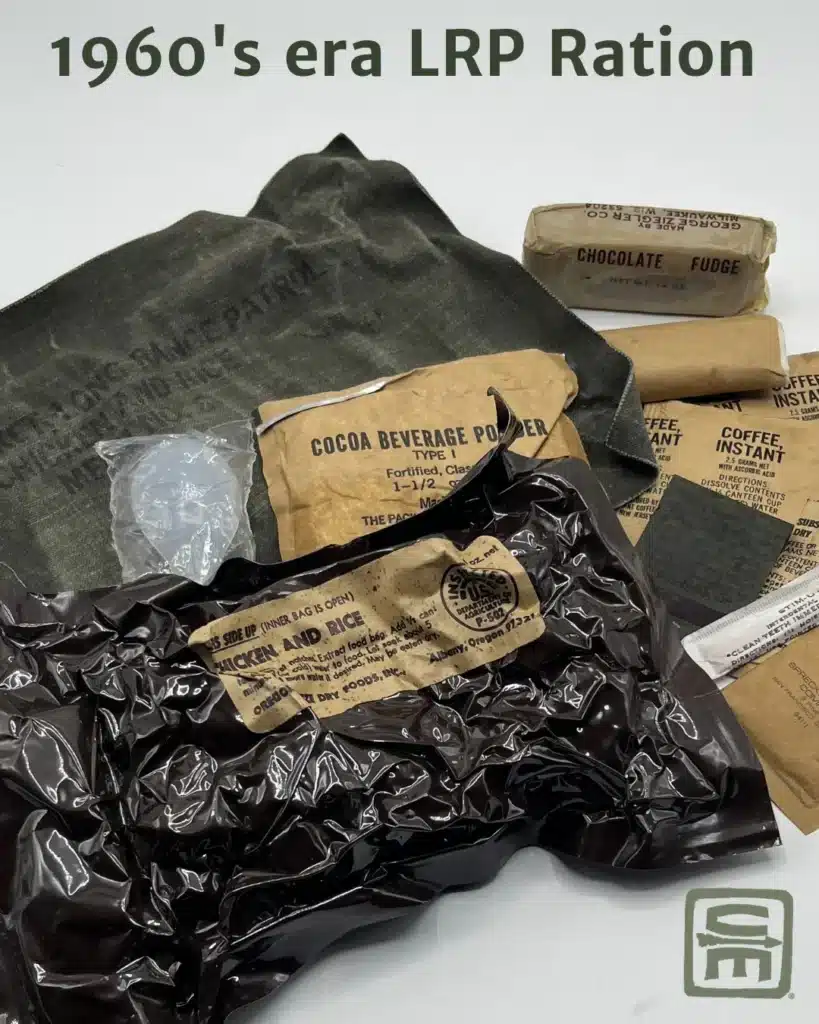
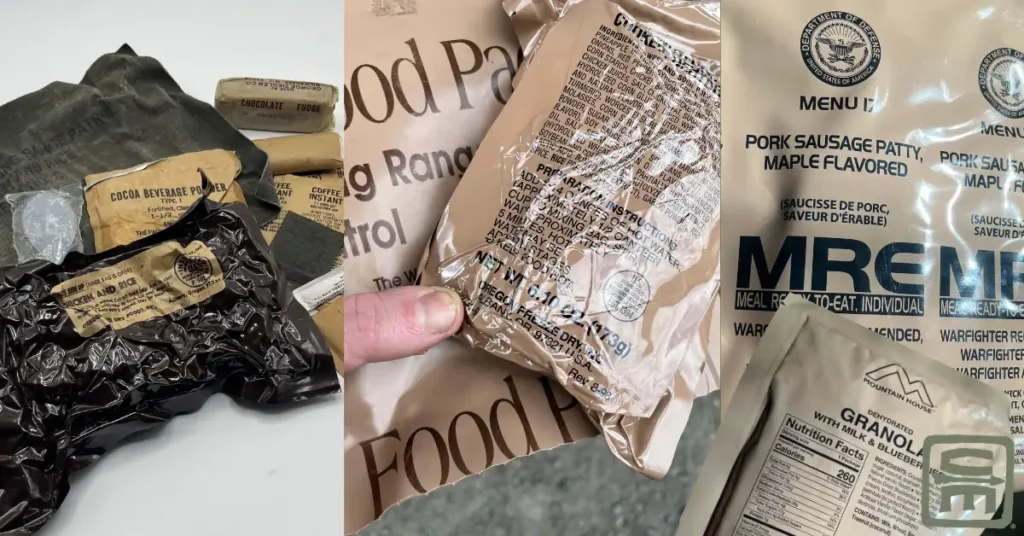
The Army’s answer was the Food Packet, Long Range Patrol, or LRP ration. The Department of Defense’s history of feeding troops in combat credited new processing and packaging technologies with producing freeze-dried products and a new ration, the LRP, with entrées such as freeze-dried chicken stew and escalloped potatoes.3 {For the cooking enthusiasts or grammar police, escalloped is an older version of scalloped potatoes, a common side dish involving cream, milk, or butter in a sauce over thinly sliced potatoes.}
Oregon Freeze Dry, the parent company of Mountainhouse, opened it’s first plant in Oregon in 1964 and three years later won a military contract that would lead to the development of LRP’s. Each meal packet weighed approximately 11 ounces, roughly a third the weight of a C-Ration meal and included both cigarettes and gum.
From breakfast cereal fruit to front line meals
Oregon Freeze Dry was formed in Oregon’s Willamette Valley to freeze-dry sliced strawberries for General Foods’ Post Toasties corn flakes breakfast cereal. Its first plant opened in 1964, first supplied product to the military in 1966, and by the following year held a multimillion-dollar contract with the U.S. Armed Forces.6 The company developed “Long Range Patrol Subsistence” for Vietnam.5 The menus included Beef Hash, Beef Stew, Chili con Carne, Chicken or Beef with Rice, and Spaghetti with Meat Sauce.
From the rucksack to recreation
Surplus has always found its way into civilian hiking backpacks. Per Mountain House, leftover military rations sold out quickly at sporting goods stores,12 and in response to customer demand, in 1969 Oregon Freeze Dry launched the Mountain House brand through a deal with REI to sell military-style freeze-dried meals to backpackers.6
Still in the ruck
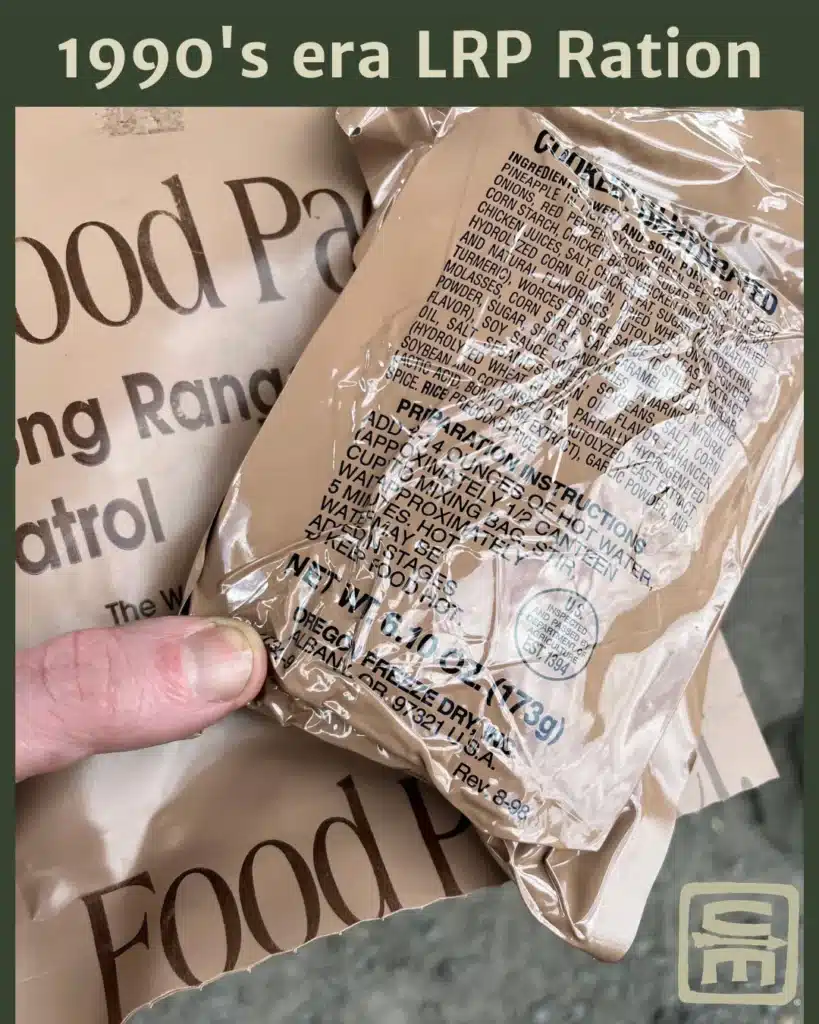
I first encountered LRP rations, containing Oregon Freeze Dried products, on SF teams in the 1990s, as they were occasionally available for operations.
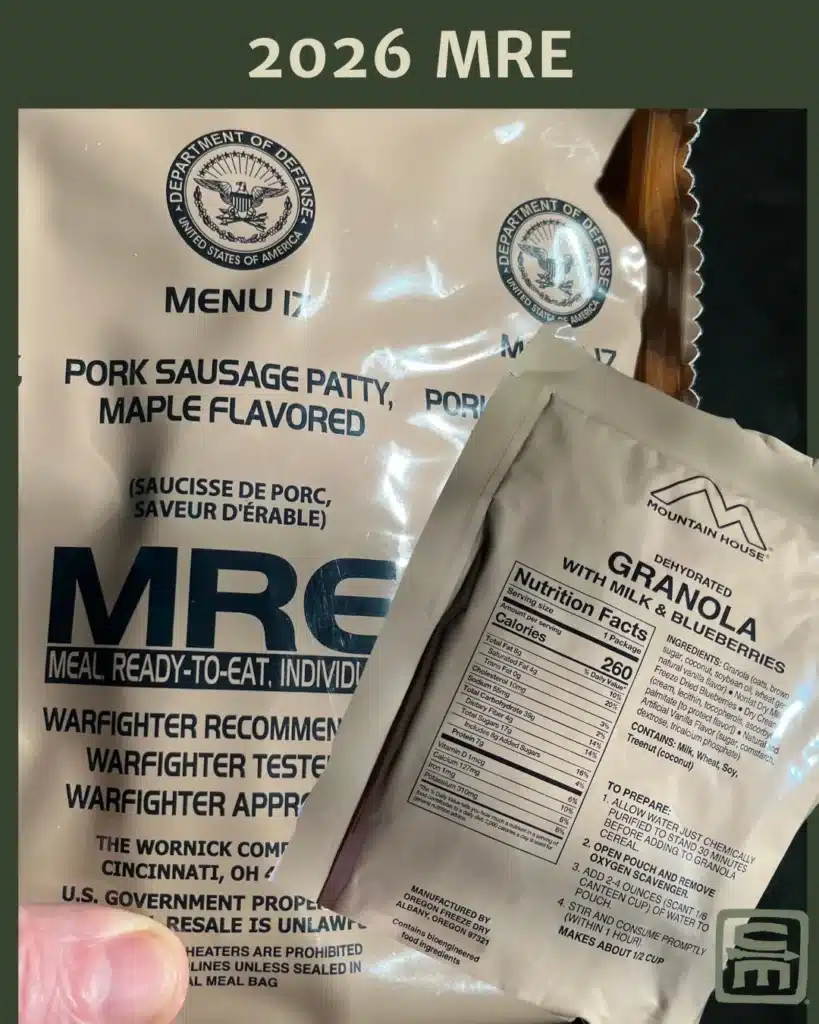
More recently, I ran into Oregon Freeze Dried products again in MREs during a deployment to a fairly austere location.
The LRP’s descendants are still in the system. The Army’s 2012 ration pamphlet describes the Meal, Cold Weather (MCW) and the Long Range Patrol packet as descendants of the original Vietnam-era LRP that reentered production early in Operation Enduring Freedom.3
The Defense Logistics Agency stopped acquisition of the LRP, and its requirements are now met by the MCW.
The preparedness lesson: freeze-dried is only light until you add water
Freeze-drying saves weight by taking the water out. To eat the meal, you have to put it back. The Army’s cold-weather ration calls for 28 to 40 fluid ounces of potable water per ration, plus a heat source.3 This was less of an SF team issue, as during long reconnaissance missions, water tends to be available in the wilderness.
Returning to FEMA’s recommendation for water storage: one gallon per person per day is 128 ounces, and it is meant for drinking and sanitation.2 Three military cold-weather meals at the top of that range would take 120 ounces on their own. Civilian pouches and #10 cans of freeze-dried food vary in their water requirements, so read the label on yours, but the principle holds: if your food storage is freeze-dried, your water storage has to cover cooking too.
Plan how you’ll heat it, and if any of your food is canned, keep a manual can opener in the kit. Maybe, consider storing it next to your first aid kit? Or your IFAK. The two are different.
Add Tactical Casualty Care to your preparedness plans
References
1FEMA Advisory, “FEMA Kicks Off National Preparedness Month 2026,” Sept. 1, 2026.
2Ready.gov (FEMA), “Build A Kit“.
3U.S. Army Natick Soldier RD&E Center, DoD Combat Feeding Directorate, Operational Rations of the Department of Defense, NATICK PAM 30-25, 9th ed., Aug. 2012 (2012 edition).
4VietnamGear.com, “LRP Rations,” spec MIL-F-43846.
5“Oregon Freeze Dry, Inc.,” International Directory of Company Histories, via Encyclopedia.com.
6 Mountain House, “The History of Mountain House,” updated July 16, 2024.
7Mountain House, “Our Story” timeline.
8Defense Logistics Agency Troop Support, “Meal, Cold Weather (MCW)”
This post is not sponsored and is FYSA only.
Crisis Medicine does not accept payment from industry nor do we use affiliate links. We review and present the medical literature. You can read our Dislcosures-None statement.