A scoping review looked at 8 randomized controlled trials (RCTs) comparing intranasal ketamine (IN) to intravenous (IV) morphine in Emergency Department patients for pain control largely secondary to kidney stones or musculoskeletal trauma. The studies comprised 40 to 184 patients from EDs in Iran, Israel, and Thailand.
Ketamine dosing ranged from 0.3 mg / kg to 1.5 mg / kg IN, with 6 of 8 studies using 1 mg / kg IN. Morphine doses of 0.1 mg / kg IV were used across all studies, except one that used fentanyl.
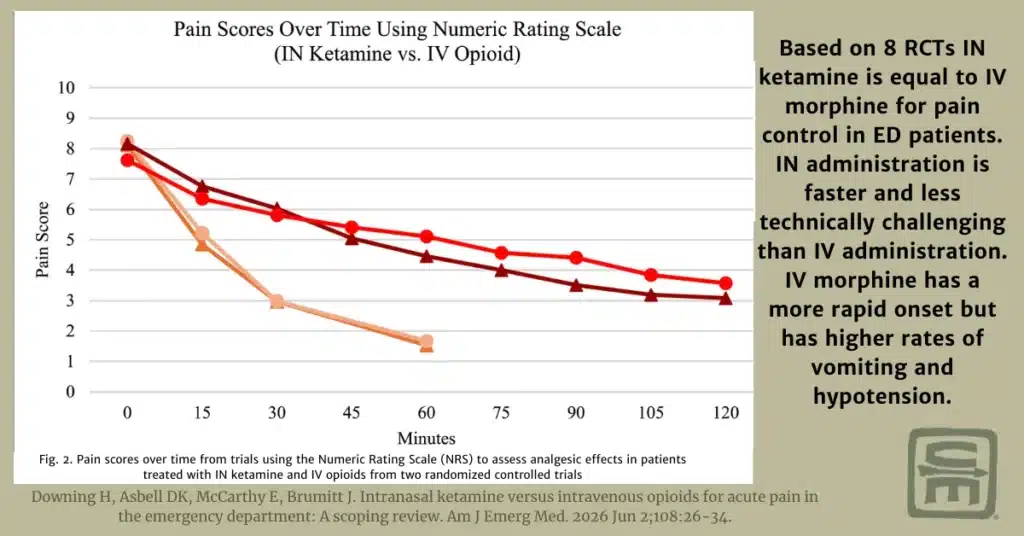
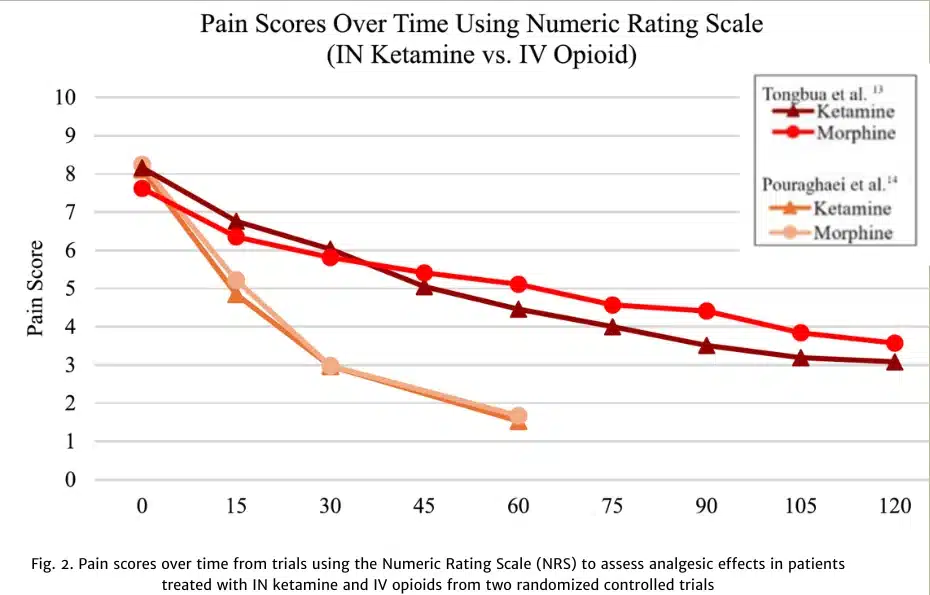
For quantity of pain control, across multiple studies, IN ketamine was equal to IV morphine.
Though one study comparing time to onset of pain relief found no statistical difference between the two drugs (14.3 minutes of IN ketamine versus 8.9 minutes IV morphine), multiple other studies showed morphine had a faster onset for pain relief. Ultimately, only 2 of 8 RCTS showed ketamine and morphine were equal for pain reduction across all time hacks. However, overall pain reduction was equal between the two medications, even if IV morphine was faster.
Adverse events (AEs) with both drugs were mild and resolved without intervention. “Dizziness and nausea” were the most common AEs. Only one patient across all studies received medications for nausea after morphine administration. That is unusual as American ED nurses will medicate just about any patient with nausea after opioids, as nobody likes to clean up vomit.
Though the statistics weren’t significantly different, 6.25% of IV morphine patients actually vomited, whereas with IN ketamine it was only 3.5%.
One study looked at the patient’s perspective and found they were equally satisfied with either IN ketamine or IV morphine.
One note is the patients in these studies were not hypotensive or in shock. Very few of the studies looked at hypotension associated with pain medications. In one study 8 of 20 IV morphine patients became hypotensive. Overall, no ketamine patients became hypotensive, whereas 3.7% of all morphine patients did. That’s why you don’t use morphine in sick trauma patients.
What does all this mean to you: IV morphine was faster to provide pain reduction, but ultimately, IN ketamine was just as good for pain control, it just took a bit longer to kick in. Related: You might also want to read: IO pain control with lidocaine
IN medication administration is an excellent way to provide medications rapidly, particularly in patients who might be challenging IV access. IN avoids fist pass hepatic metabolism, but most drugs have a reduced bio availability IN. Ketamine specifically is 40 to 50% bioavailable IN. That means only half of what you squirt in their nose actually gets into the blood stream and does the work. One caveat for IN, since the maximum volume for IN is <1 ml per nostril, drug concentrations matter.
Downing H, Asbell DK, McCarthy E, Brumitt J. Intranasal ketamine versus intravenous opioids for acute pain in the emergency department: A scoping review. Am J Emerg Med. 2026 Jun 2;108:26-34.