Recently there has been an increase in discussions regarding hypercalcemia and trauma patients. Preliminary evidence suggests being traumatically injured and having an abnormally high calcium level is just as detrimental as hypocalcemia.
🕖 Reading Time, 4 minutes
Researched and written by Mike Shertz, MD/18D, not AI
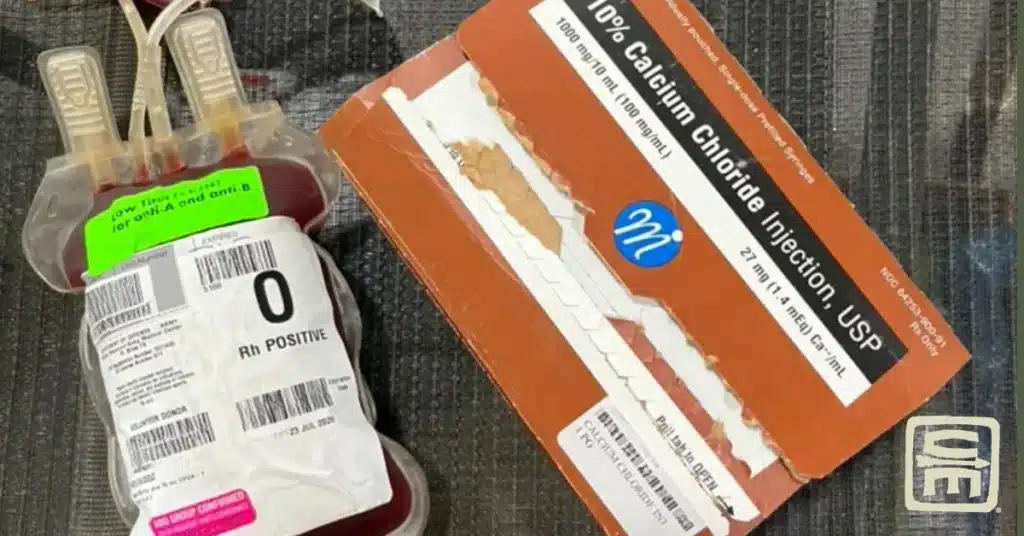
Both Joint Trauma System clinical practice guidelines and TCCC guidelines mandate that 1 gram of calcium be administered with the first unit of blood products in casualties in shock. Many civilian EMS and aeromedical systems have adopted similar protocols.
That raises a practical question: How common is it for trauma patients receiving prehospital blood and supplemental calcium, per these guidelines and protocols, to arrive at the Emergency Department hypercalcemic?
The Study
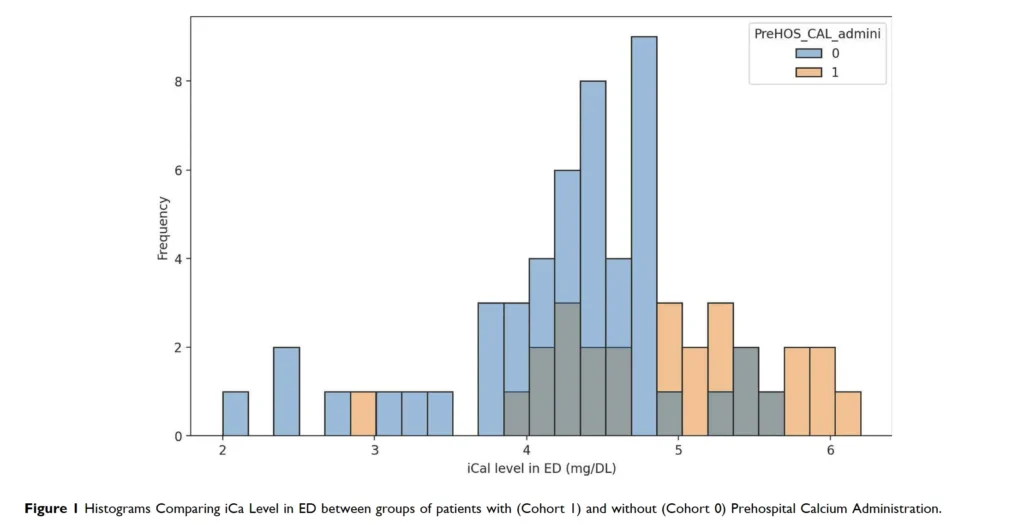
A retrospective cohort analysis compared adult trauma patients transported from the scene by aeromedical assets to a single Level I trauma center between 2018 and 2024. All patients received prehospital blood products, with or without 1 gram of calcium chloride IV.1
Of 87 trauma patients, 33 received blood products and calcium chloride. The remaining 54 received blood products alone.
What the Data Showed
Hypercalcemia on arrival occurred in only 6.1% of patients who did not receive calcium, versus 33.3% of those who did. On multivariate analysis, the likelihood of arriving hypercalcemic after prehospital blood and calcium administration was 188-fold higher.
The administration of calcium with blood clearly decreased the frequency of hypocalcemia on ED arrival. 79.6% of patients who did not receive prehospital calcium arrived hypocalcemic, versus 41% of those who did.1
In this study, there was no difference in length of hospital stay between patients who received blood and calcium versus blood alone, and no statistically significant reduction in death with calcium administration. There was, however, a trend toward better survival with calcium administration. Improved survival is what is hoped for by supplementing calcium with blood administration.
Studies drawing on data from a single center, though interesting, must always be viewed as suggestive rather than proof. The vast majority of single-center studies are ultimately shown to be wrong, or to overestimate the effect of whatever they are studying.2
This study did not specifically look at the death rate of patients with hypercalcemia. However, another study did.
A Second Study, and a Different Picture on Mortality
In a prospective observational study of 1,270 major trauma activations at three US Level I trauma centers, both hypocalcemic and hypercalcemic patients had increased 6- and 24-hour mortality compared to patients with normal calcium levels. The exact values used were each trauma center’s own “normal” lab reference range.
Specifically, the death rate at 24 hours was 22.8% with elevated calcium, versus 11.9% if calcium was low. Patients with calcium in the lab’s normal range had a death rate of only 4.3%. The increased mortality for both high and low calcium levels persisted at 30 days. 3
Based on this study, arriving hypercalcemic might be worse than arriving hypocalcemic.
What This Means for Prehospital Protocols
What does this mean for you? Do you stop giving empiric calcium supplementation with your blood? More data is needed to clearly establish whether hypercalcemia from calcium administration with blood products increases the death rate of trauma patients. Until that data exists, it is reasonable to stick to established prehospital guidelines and protocols administering calcium with blood products.
At the hospital level, perhaps the answer is to only administer calcium with blood products if the patients ionized calcium is actually low?
Expect to hear more about hypercalcemia concerns in the future.
References
1Sodade OE, Kummer KA, Austin CL, Draper BB. Pre-Hospital Calcium Administration Reduces Incidence of Hypocalcemia and Mortality in Trauma Patients. Open Access Emerg Med. 2026 Apr 11;18:556834.
2Unverzagt S, Prondzinsky R, Peinemann F. Single-center trials tend to provide larger treatment effects than multicenter trials: a systematic review. J Clin Epidemiol. 2013 Nov;66(11):1271-80.
3Schauer SG, Nicholson SE, Rizzo JA, Wright FL, Arana AA, April MD, Barry L, Bynum J, Cheng AC, Fisher AD, Gurney JM, Huaman RJ, Jenkins DH, Kirkwood BJ, Lambert BC, Long BJ, Mancha F, Martinez MA, Meledeo MA, Mendez J, Newton I, Shackelford SA, Sifuentes D, Bebarta VS, Cap AP. Initial Calcium Derangements in Major Trauma and Outcomes. JAMA Netw Open. 2026 Feb 2;9(2):e260083. doi: 10.1001/jamanetworkopen.2026.0083. Erratum in: JAMA Netw Open. 2026 Apr 1;9(4):e2611311. doi: 10.1001/jamanetworkopen.2026.11311. PMID: 41739471; PMCID: PMC12936877.