Improvised Tourniquets Work If You Build Them Correctly
🕖 Reading Time, 4 minutes
Researched and written by Mike Shertz, MD/18D, not AI
Critics of improvised tourniquets say they are ineffective. Some claim, “if you’re planning to improvise, you’re planning to fail.” We disagree with this statement. Proper planning includes having a primary plan, in this instance a commercially available tourniquet, and an alternate plan.
Improvised tourniquets are not a substitute for a commercial tourniquet. They are what you use after the commercial tourniquets are gone.
What happens when you run out of tourniquets
in your mass casualty event?
You improvise.
Why the 25% improvised tourniquet failure rate is misleading
The literature most quoted in opposition to improvised tourniquets is Colonel John Kragh’s article: Practical use of emergency tourniquets to stop bleeding in major limb trauma.1 That article noted a 25% success rate of hemorrhage control with the application of improvised tourniquets placed on casualties treated at a combat support hospital in Iraq in 2006.
However, when looking at the medical literature, one has to read deeper in a study than just the abstract to evaluate the application of this data.
The 25% figure comes from 16 tourniquets made of string, cord, and IV tubing
The study evaluated a grand total of 16 improvised tourniquets which were placed on 15 injured limbs involving 15 casualties. Of the 16 improvised tourniquets placed, four were felt to be effective. This obviously is not a glowing endorsement for improvised technique. However, the 16 improvised tourniquets consisted of “cravats, dressings, a string, a belt, a cord, a band, and intravenous tubing.”1 These are not properly improvised tourniquets.
Wider cravat tourniquets, applied side by side, succeeded 42% of the time
The study noted that the wider improvised tourniquets, made from cravats, particularly when two were applied side by side were more effective, specifically 42% (3 of 7) of limbs.1
Kragh’s own recommendation endorses improvised windlass tourniquets
At the conclusion of the article, the authors make several recommendations, among them: “Use scientifically designed, laboratory tested, and clinically validated tourniquets. Use improvised windlass tourniquets when scientifically designed tourniquets are unavailable.”1 We wholeheartedly agree.
Two other studies found much higher improvised tourniquet success rates
Improvised Russian tourniquets stopped bleeding in 72% of thigh wounds
Second, an IDF study published in 2003 found that “the improvised Russian tourniquets (defined as improvised at the scene using a nonelastic strap wrapped around the injured limb and tightened with a wooden stick) applied to thigh wounds succeeded at stemming active bleeding in 72% of cases.”2
Cloth and a stick from a woodpile occluded flow in 9 of 10 volunteers
Lastly, in an article by Swan, ten improvised tourniquets were made from “discarded” cloth. The cloth was sized to 48 x 12 inches, folded to three inches wide, and utilized a 12-inch stick “from a woodpile.” The improvised tourniquets were placed on volunteer thighs and tightened until intolerable pain or cessation of posterior tibial artery pulse, measured by Doppler ultrasound. They were effective in 9 out of 10 volunteers. One volunteer could not tolerate the discomfort before complete occlusion.3
How to make a proper improvised tourniquet?
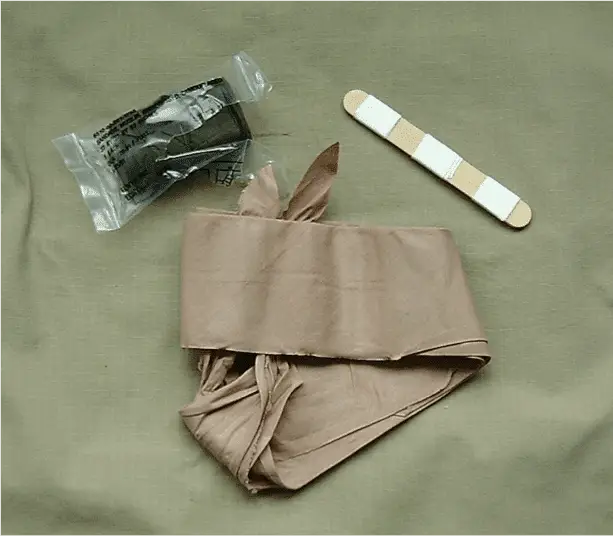
A properly improvised tourniquet uses a strip of fabric. It should be 2-4” wide and long enough to wrap several times tightly around the casualty’s limb. We like to have cravats in your IFAK, as a good, multipurpose piece of kit.
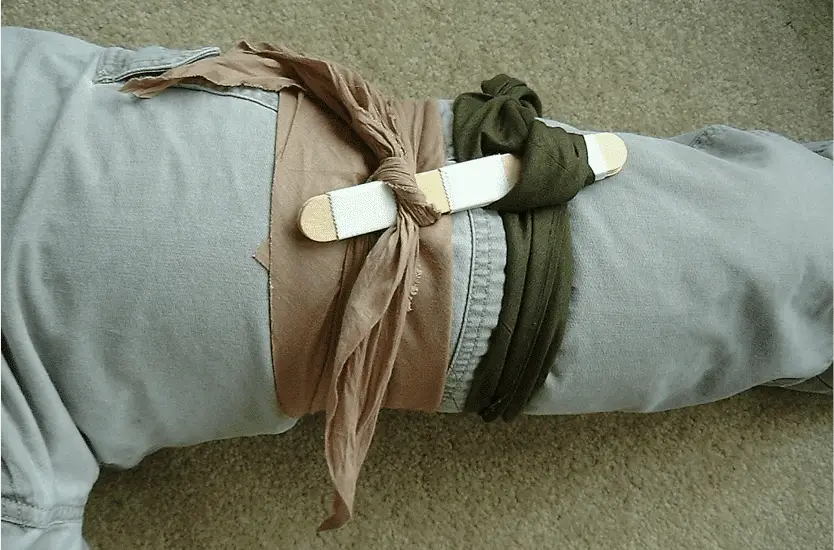
- After tying a square knot, a windlass must be used to adequately tighten the improvised tourniquet.
- Next, lifting up slightly while twisting can often avoid pinching the casualty and decrease discomfort.
- Lastly, the windlass must then be secured, preferably with another triangular bandage or cravat.
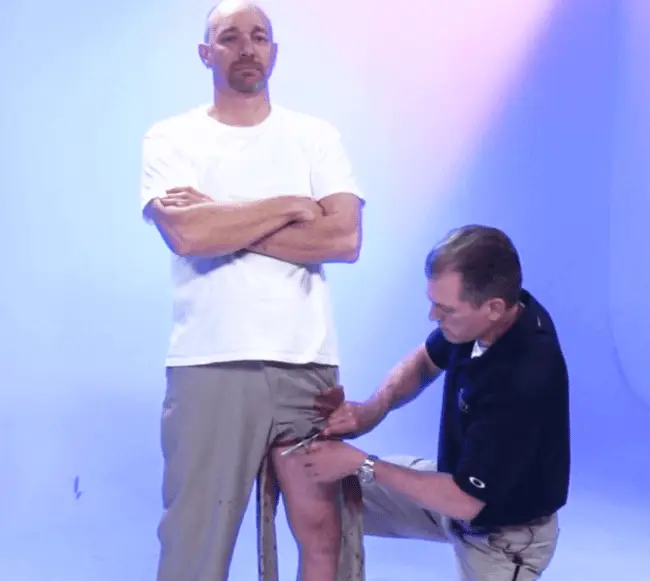
The casualty’s own clothing works as a contingency
Which windlass works best for an improvised tourniquet?
Finally, remember the windlass will then be “lost” to further use. For this reason, flashlights, magazines, and shears are not our favorite windlasses because those items probably need to be used for other jobs. Almost any narrow, rigid item could work and Col. Kragh also found chopsticks are adequate.4 A metal pen is a good choice as well. You simply need something stout enough, and long enough to allow you to twist it, not break under strain, and be able to secure it in place.
A clinically proven tourniquet is our first option
When given a choice, a clinically proven tourniquet is our first option. If given no other options, we train to effectively stop massive hemorrhage using what is on hand.
For a helpful review article of literature regarding improvised tourniquets, check out Dr. Stewart’s article, Improvised Tourniquets: Obsolete or Obligatory?5
References
1 Kragh JF Jr,Walters TJ, Baer DG, Fox CJ, Salinas, Holcomb JB Practical use of emergency tourniquets to stop bleeding in major limb trauma. J Trauma. 2008 Feb;64(2 Suppl):S38-49; discussion S49-50.
2 Lakstein D, Blumenfeld A, Sokolov T, Bssorai R, Lynn M, Abraham R, Tourniquets for hemorrhage control on the battlefield: a 4-year accumulated experience. J Trauma. 2003 May;54(5 Suppl):S221-5.
3 Swan KG, WrightDS, JR, Barbagiovanni SS, Swan BC, Swan KG. Tourniquets Revisited. J Trauma. 2009:66(3) 672-675
4 Kragh JF Jr et al, Which Improvised Tourniquet Windlasses Work Well and Which Ones Won’t? Wilderness Environ Med. 2015
5 Stewart SK, Duchesne JC, Khan MA Improvised tourniquets: Obsolete or obligatory? J Trauma Acute Care Surg. 2015 Jan;78(1):178-83