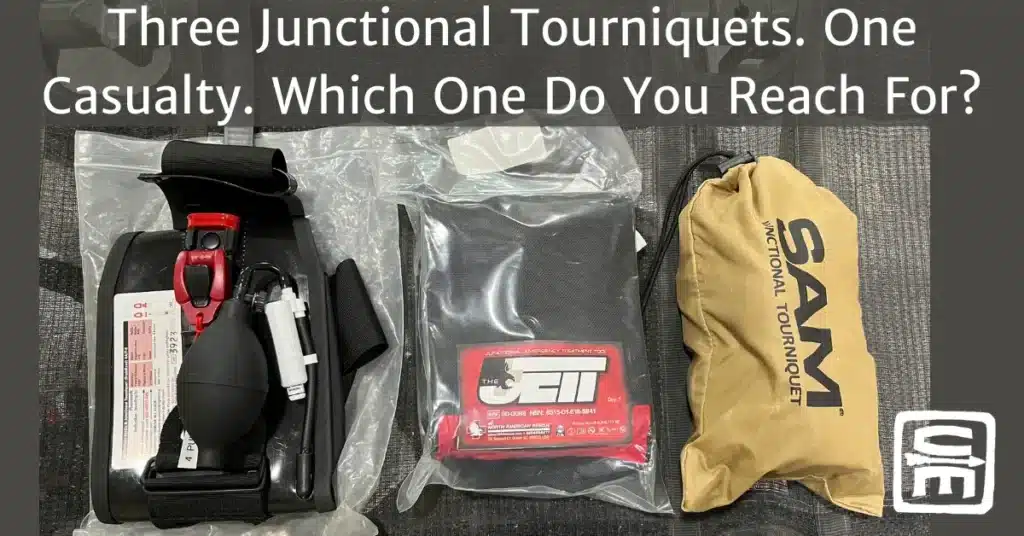
Three Junctional Tourniquets. One Casualty. Which One Do You Reach For?
Researched and written by Mike Shertz, MD/18D, not AI
🕖 Reading Time, 2 minutes
Miyamoto Musashi one of Japan’s most famous samurai and author of “the book of five rings“ perhaps the best book ever written on personal combat was once asked what his favorite weapon was. His answer, “a warrior shall have no preference”.
Although I agree in spirit, I do think it’s fine to have preferences as long as there is evidence supporting one device over another. However, as a professional, one should be fully capable with all equipment one might find on the battlefield whether that’s weapons or medical supplies.
You can easily be forward deployed and provided equipment that is “not your preference”. If it’s what you have, you better know it’s assets, liabilities, and how to use it.
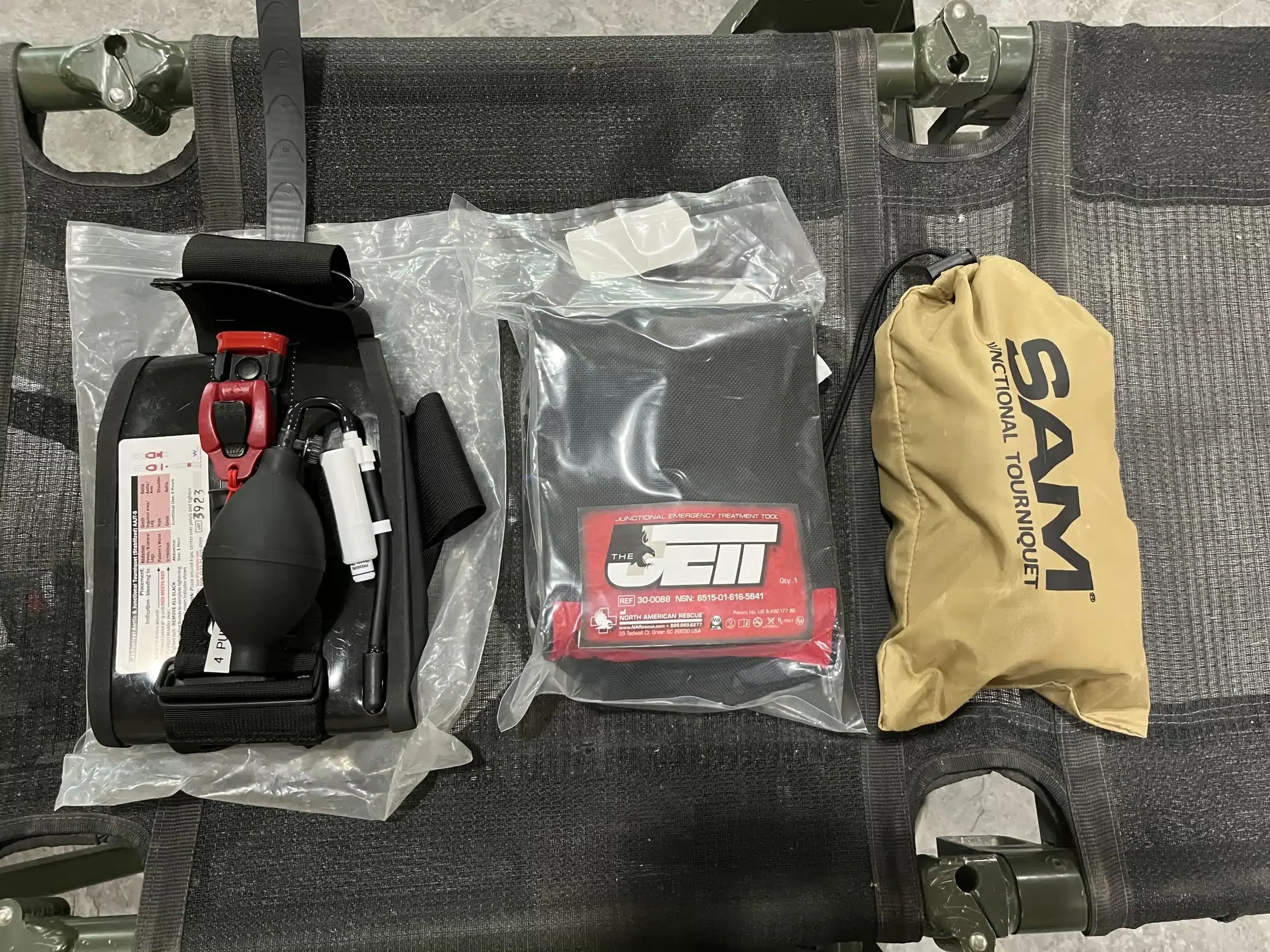
In this case, you access to three different junctional tourniquets. You don’t have enough of any one type to discount the use of the others.
Which is going to be your first choice to use on a casualty needing junctional hemorrhage control and why?
Are these three devices completely interchangeable?
Which ones are FDA approved as pelvic binders?
49 Navy Corpman place the CRoc clamp, JETT, and SAM JT on each other with realtime Doppler ultrasound informing them whether they had achieved arterial occlusion.
- If the pulse was not eliminated in 120 seconds, it was considered a failure. Ultimately, all three devices had similar occlusion rates between 82 and 84%.
- If successful occlusion was achieved. You moved on to step 2 of the study.
The casualty with the occluding junctional device in place was put on a litter (by either lifting or rolling) carried 15 feet, put down, and then pulses were again verified with doppler.
After litter movement the SAM JT maintained the highest ongoing occlusion. However, it was only in 48% of cases. That meant half the placements that were successful before placement on the litter failed after such minimal movement.
Even worse, the JETT and CRoc maintained 24% and 36% occlusion respectively.
Reference:
Gaspary MJ, Zarow GJ, Barry MJ, Walchak AC, Conley SP, Roszko PJD. Comparison of Three Junctional Tourniquets Using a Randomized Trial Design. Prehosp Emerg Care. 2019 Mar-Apr;23(2)