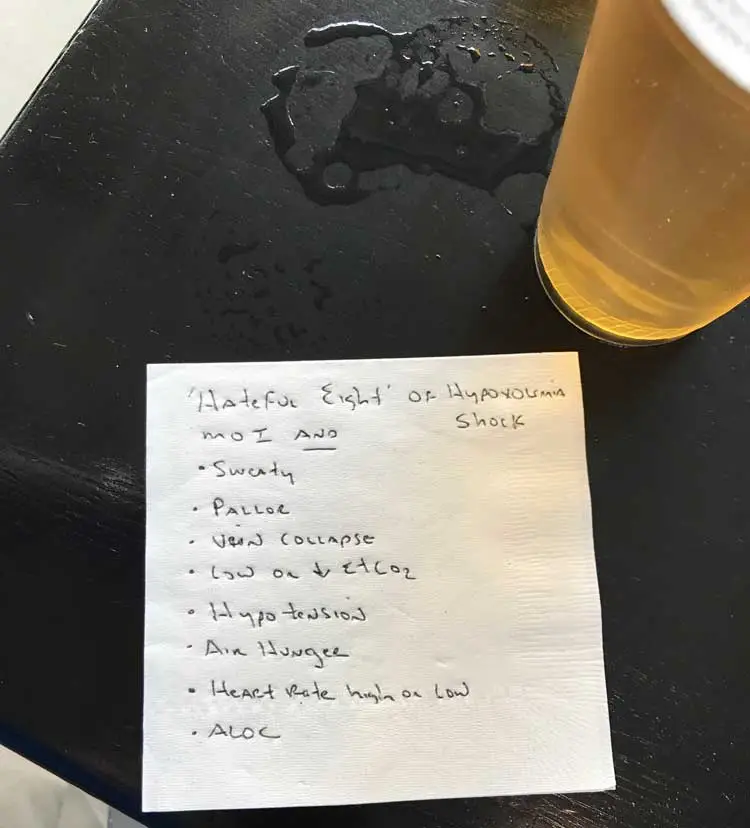
🕖 Reading Time, 3 minutes One of the best parts of the Special Operations Medical Association annual meeting is connecting with your peers and discussing issues we all deal with. One evening, while having a bar napkin discussion about prehospital …

The easy to remember mnemonic MARCH reminds us of the priorities in treating casualties during TECC and TCCC situations. MARCH provides a framework to address immediate life threats and gives an organized approach to begin a casualty evaluation. The MARCH mnemonic is preferable to the ABCDE model because it takes into consideration the reason you need an airway and to be breathing is to circulate blood to the casualty’s brain. Recognizing that, the first step in our casualty evaluation should be to look for massive hemorrhage.
Once past massive hemorrhage, A-R-C is loosely approximated by A-B-C. H- is a reminder that a large number of traumatic casualties arrive at the emergency department or medical treatment facility hypothermic which dramatically increases their death rate.
The MARCH mnemonic can be applied to any patient, as the initial casualty evaluation usually rules out massive hemorrhage.
🕖 Reading Time, 3 minutes One of the best parts of the Special Operations Medical Association annual meeting is connecting with your peers and discussing issues we all deal with. One evening, while having a bar napkin discussion about prehospital …
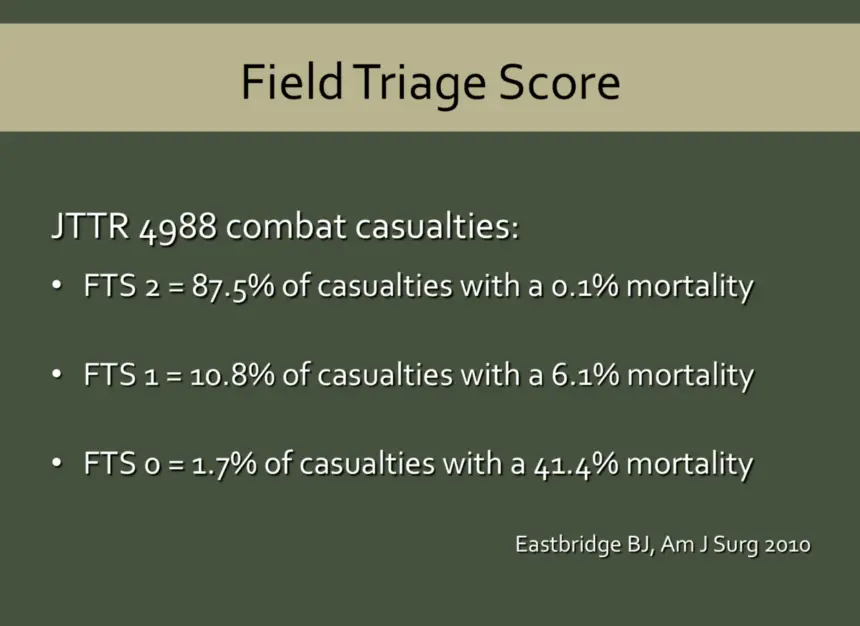
The Field Triage Score simplifies this process 🕖 Reading Time, 4 minutes. Reviews of most mass casualty events have shown that rarely is a preplanned triage system actually used in the event. Triage is a French word for sorting. Although …
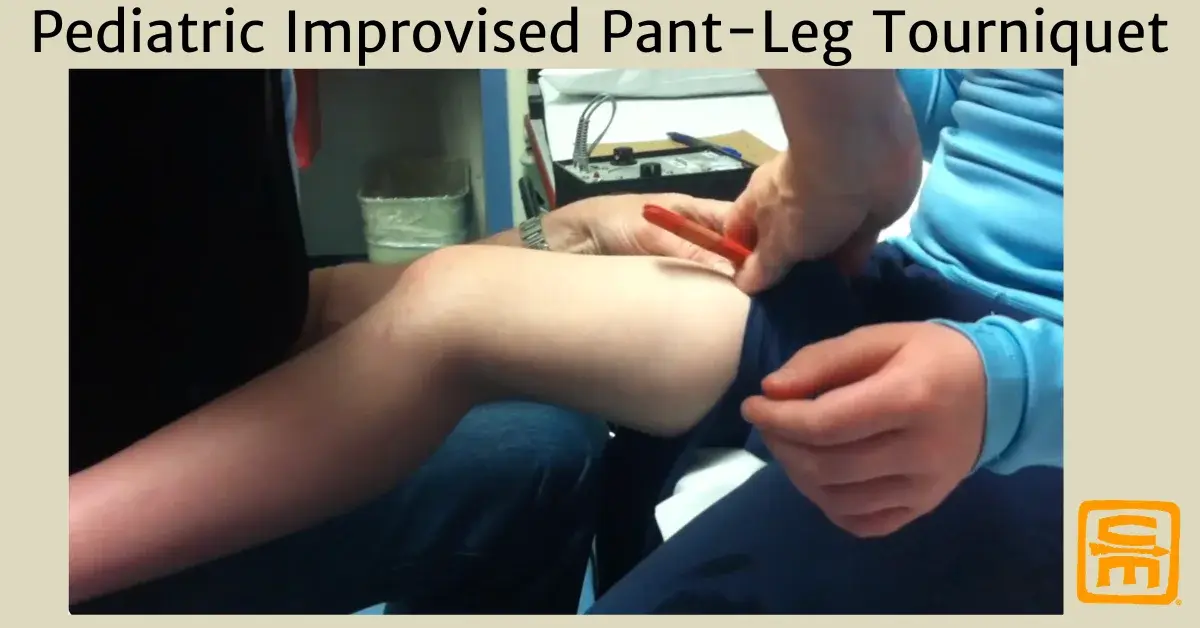
It’s always better to have proven, dedicated medical equipment in an emergency. Our primary plan is always to use a commercially available tourniquet with medical evidence it works, supported by human studies. However, at some point in your life, you will …
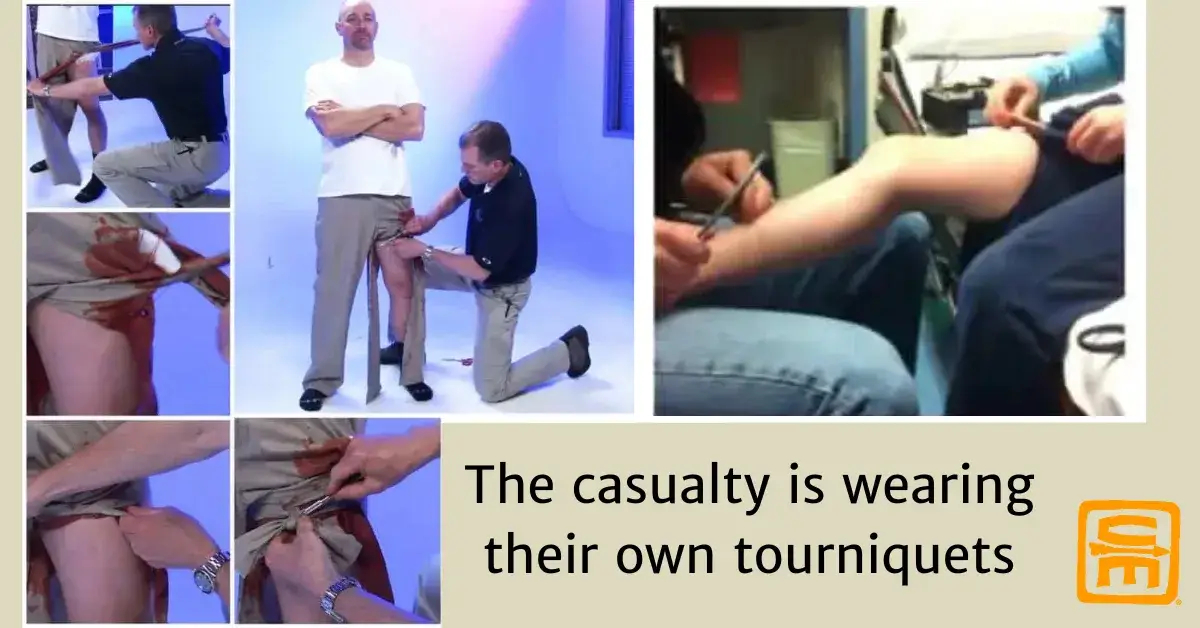
🕖 Reading Time, 2 minutes Researched and written by Mike Shertz, MD/18D, not AI Our first plan to manage massive extremity hemorrhage is to use a proven commercially available tourniquet. Barring that, create an improvised tourniquet using a cravat, or …
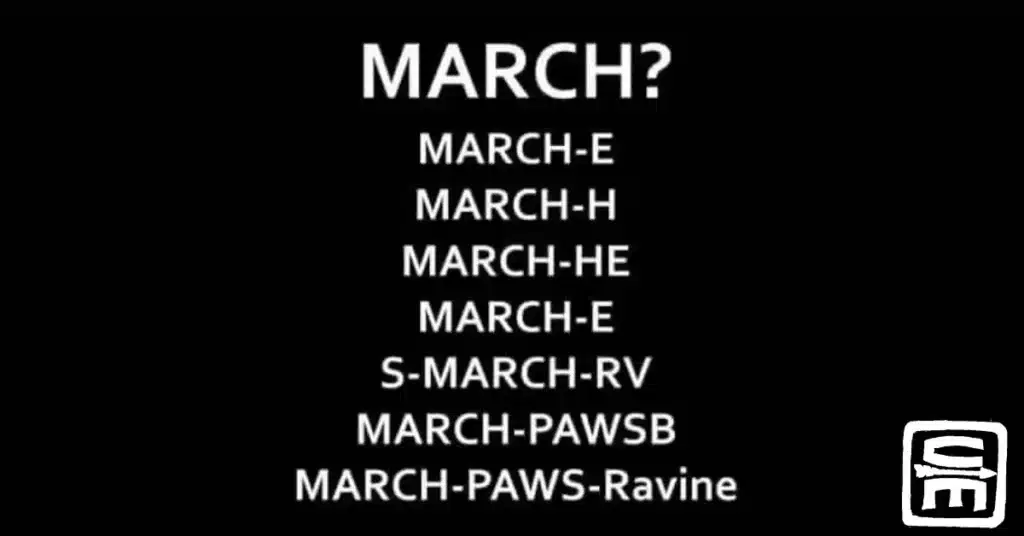
The MARCH mnemonic is a superior model for evaluation of trauma patients compared to the traditional A, B, C model. 🕖 Reading Time, 3 minutes The Airway, Breathing, Circulation model fails in root cause analysis: The ultimate goal of having …

Change in CAT tourniquets from 6th to 7th generation 🕖 Reading Time, 4 minutes In October 2015, the 6th generation Combat Application Tourniquet, or CAT, with its double-eyelet buckle was discontinued, in favor of the 7th generation CAT which has …