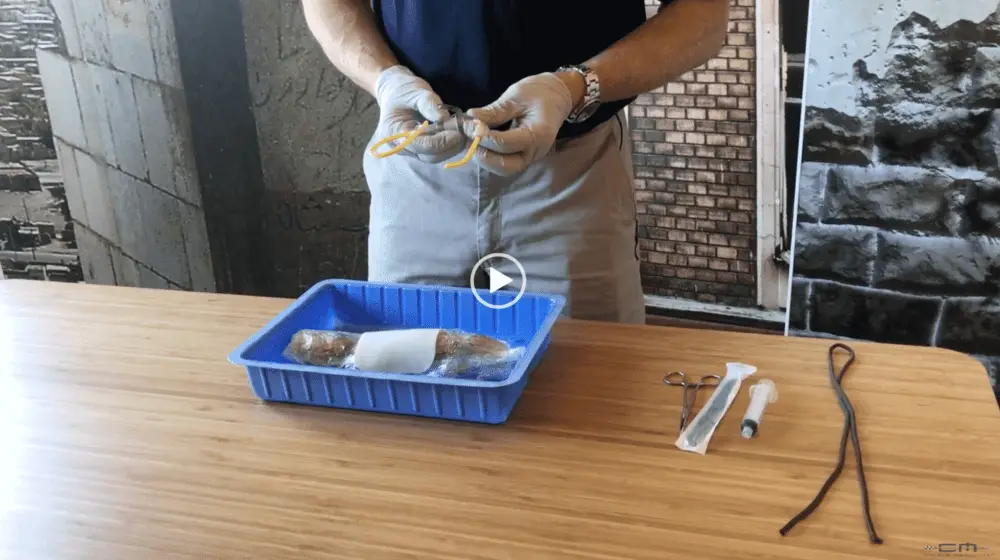
How the NAR tracheostomy kit with bougie introducer goes in, and why it does not replace the surgical airway you still have to cut yourself.

The 1970 WDMET Vietnam data set that showed 10% of all military fatalities were from massive extremity hemorrhage also identified 1.6% of casualties required some degree of airway management. This data lead to the TCCC guidelines.
The second step in our MARCH mnemonic is Airway. It was traditionally the first step in the Red Cross A-B-C model (Airway, Breathing, Circulation) which was a failure of root cause analysis in dealing with traumatic casualties.
We want an open airway so our casualty can respire, or breathe, to oxygenate their blood, which is going to their heart and brain so they can remain conscious and alive. Once we’ve managed to keep the blood in the body, we then need an open airway to allow the oxygenation of that blood. Half of those simply needed airway positioning, the other half required more aggressive techniques. Often, rolling a casualty on their side, or into the “recovery position” can be enough to open their airway. Direct airway injuries, like a blow to the face or a gunshot wound to the jaw can require more invasive procedures like a surgical airway.
How the NAR tracheostomy kit with bougie introducer goes in, and why it does not replace the surgical airway you still have to cut yourself.