
No Emergency Department is fully prepared and stocked to manage 41 trauma casualties arriving in 45 minutes following a mass casualty incident (MCI) or active violent incident (AVI) as happened at Christchurch Hospital in New Zealand in 2019.
🕖 Reading Time, 4 minutes
Researched and written by Mike Shertz, MD/18D, not AI
The term First Receivers was coined in reference to terrorist attacks using chemical or biological weapons.
In 2003, Kristi Koenig1 used the phrase “First Receivers” as a reference to Emergency Physicians who might care for chemically contaminated casualties after a terrorist event. The suggestion was made that First Receivers are “clinicians and other hospital staff who have a role in receiving and treating contaminated victims (e.g., triage, decontamination, medical treatment, and security).” They described contaminated casualties arriving at hospital EDs, who were likely to be neither adequately equipped or prepared to deal with decontamination of the wounded. Although the Fire service and EMS have plans to decontaminate those involved in an attack, “80% of casualties from the scene of a chemical release self-refer to the hospital.” 1
This term was in contrast to the more common term “First Responders.” Some have argued First Receivers are a “a subset of first responders” (e.g., firefighters, law enforcement, HAZMAT teams, and ambulance service personnel). However, most First Responders typically act at the site of an active violent incident, as opposed to in the Emergency Department or Hospital. 2
The moment multiple casualties arrive, by private car, uber, and ambulance, the operational problem fundamentally changes. Hospitals are optimized for flow, not for throughput of an overwhelming number of casualties.
As part of the chain of survival concept, the Committee for Tactical Emergency Casualty Care (C-TECC) has used the term First Receivers in a similar context to describe fixed facility healthcare workers who would be the first to provide care to casualties of an active violent incident or MCI.
In the Las Vegas active shooter event in 2017, 80% of those patients arriving at one Las Vegas hospital came by private car, cab, or ride-sharing app, and many arrived before EMS. 3
Emergency Department-based medical providers are well trained and equipped to manage critically injured and ill patients who arrive in the course of a typical shift. However, looking at the ED experience of overwhelming numbers of patients in prior ‘No Notice” mass casualty events or MCIs has much to offer when considering one’s own medical responses, planning, and familiarization to these events.
Lessons Learned in Blood from prior MCI's
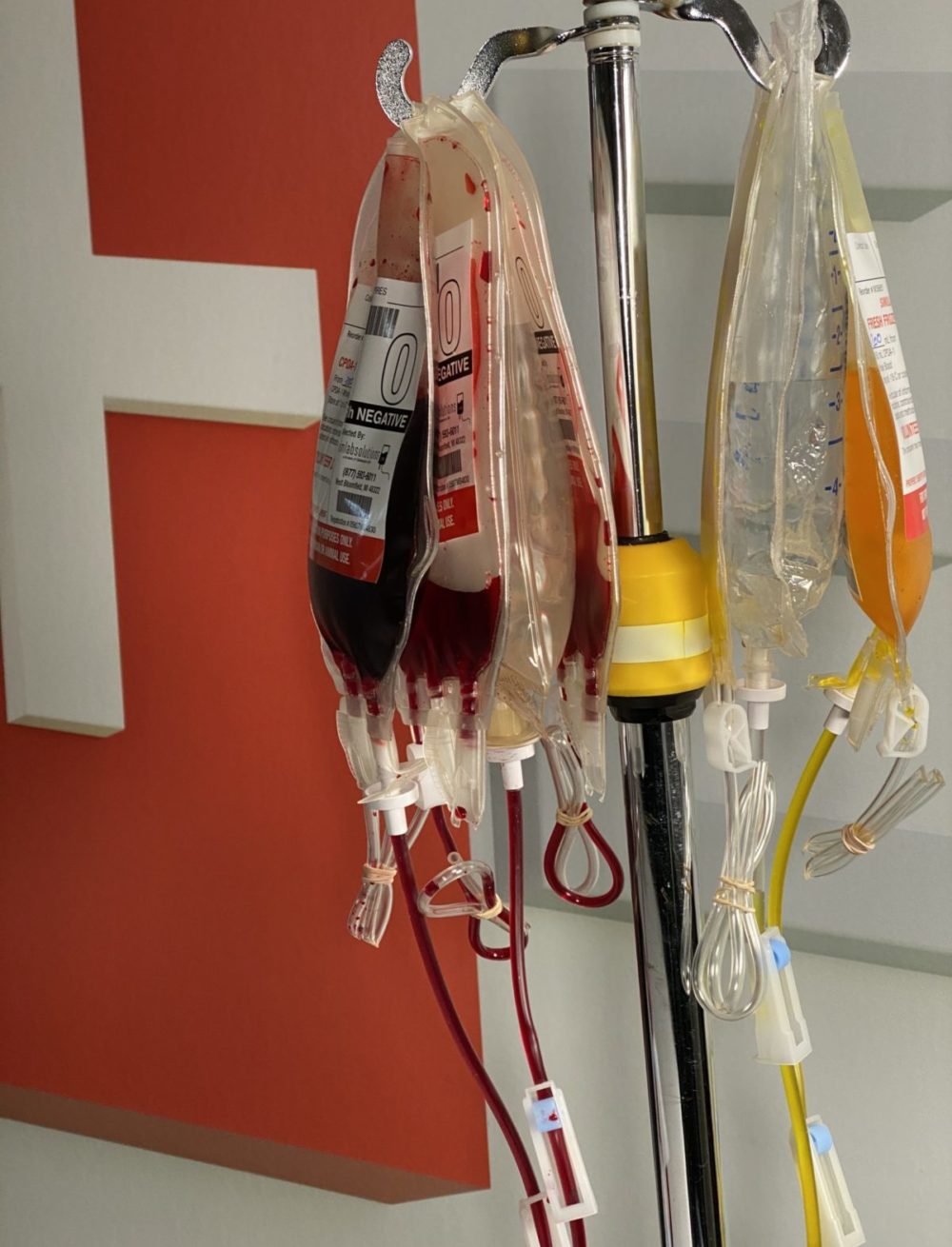
The medical community does a good job of studying some details of these incidents. We know how many blood products were used in the casualty management of the Las Vegas shootings. Those details are quantifiable. Unfortunately, “lessons learned” from these events are often not captured or promulgated. For example, every Emergency Department always runs out of chest tubes, but that detail does not lend itself to publication. Institutional knowledge of how to effectively run an ED during a mass casualty event, where business-as-usual will not work, is also minimal as almost no department has done it more than once.
There will always be friction points, confusion, and equipment limitations regardless of planning, but by identifying patterns and recurrent problems in these events, Crisis Medicine’s First Receiver class will help you plan in-depth for how to manage these events in the Emergency Department.
We explore the literature on recent “No Notice” active violent incidents or mass casualty incidents and extract lessons learned from those and other mass casualty events in order to better manage the chaos of an ED receiving an overwhelming number of casualties.
Understanding the First Receiver role requires thinking beyond traditional emergency medicine training. It sits at the intersection of casualty care, systems management, and operational risk — an area that is rarely addressed directly. Crisis Medicine’s First Receiver class is designed to teach non-trauma center Emergency Department personnel Tactical Emergency Casualty Care and move TECC into the ED.
1 Koenig KL, Strip and Shower: The Duck and Cover of the 21st Century. Ann Emerg Med 2003, 42:391-394
2 OSHA Best Practices for HOSPITAL-BASED FIRST RECEIVERS OF VICTIMS from Mass Casualty Incidents Involving the Release of Hazardous Substances. January 2005
3 ASPR TRACIE Tip Sheet: No-Notice Incidents 2018
A must have in your medical knowledge tool bag
The First Receivers course is a must have in your medical knowledge tool bag to ensure you and your medical facility are prepared for mass casualty events. Outstanding recommendations that include cutting edge tactics, tips, and procedures (TTPs), will increase your preparedness and that of your facility to handle worst case scenarios.
This is the fourth course I have taken with Crisis Medicine. You will be extremely hard pressed to find any equal in on-line medical training than that given by Dr. Shertz. As former Army combat veteran, West Point instructor, and current Red Cross licensed training provider, Coast Guard Auxiliarist, lifeguard, and diver... When Dr. Shertz speaks, I listen and take notes. Enroll in this course, it will increase your ability to save lives and help your organization to improve, and be well worth the money and time invested.
Regards,

...These events require a mindset change from typical emergency responses...
I decided to take this class because I am a forward-deployed medic, working in the only clinic on-site, and we have a high probability of experiencing a mass casualty event. Though we train for this weekly, it has always seemed as though we don't move efficiently through our patient load and never quite understood why.
Now, after viewing this course, I now understand that these events require a mindset change from typical emergency responses. I am now better prepared to go to my seniors and advocate for changes, as well as better train my juniors. Thank you for yet another exceptional class.