Combat Gauze has been extensively used on humans and research animals, most of which were porcine models. Despite its recommendation for use in K9 TCCC / K9 TECC, there is very little published experience on its application in actual canines.
🕖 Reading Time, 3 minutes
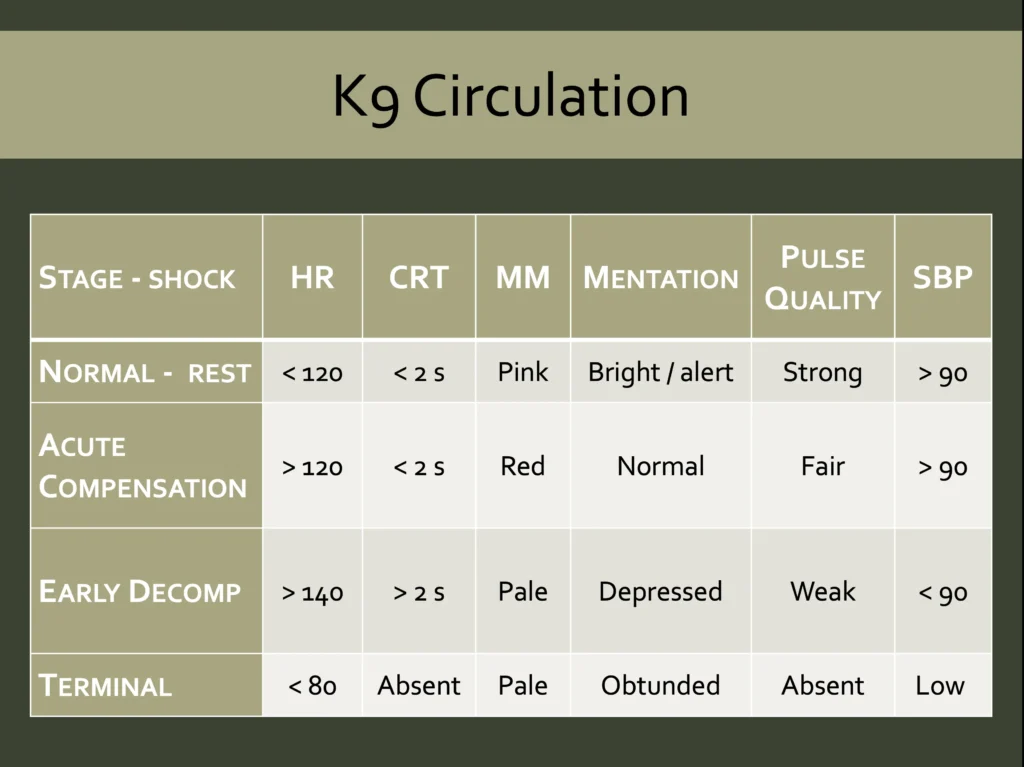
In a case study, a 10-year-old Doberman Pincher presented with several bite wounds to a pelvic hind limb. Severe hemorrhage was observed from a 2 cm long x 4 cm wide x 7 cm deep laceration on the inguinal aspect of the limb. The dog was in decompensated shock, as evidenced by a heart rate of 180 bpm, a capillary refill time of 3 seconds, pale mucus membranes, obtundation, and a weak femoral pulse on the uninjured limb.
The laceration was packed with Combat Gauze, achieving hemostasis, and the dog was successfully resuscitated. During surgery, a laceration of the femoral vein was identified.
In the same case series, three other canines in hypovolemic shock from blood loss had their wounds packed with Combat Gauze, effectively controlling their hemorrhage. One dog had open upper extremity fractures, and two had post-operative bleeds. Combat Gauze appeared to work as expected without any issues.
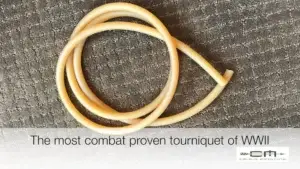
While it may not be surprising that hemostatic gauze worked in these wounds, because of the similarity of mammals, caution must be exercised in extrapolating or making assumptions until there is sufficient data to confirm efficacy. For example, for humans, there are many 1.5-inch-wide commercial tourniquets, and although they are the same width, they have markedly different effectiveness rates at controlling limb blood flow.
Note: limb tourniquets aren’t really effective on K9s because of the tapered shape of their legs. Additionally, for the most part their artery / vein bundles run along bone and close to the surface making wound packing and pressure dressings better options. This is the one place the SWAT-T stretchy wrap excels.
Notes:
The use of a kaolin-based hemostatic dressing to attenuate bleeding in dogs: A series of 4 cases. Huther A, Edwards TH. Vet Emerg Crit Care (San Antonio) . 2024 Mar-Apr;34(2):166-172.