IN SEAMANSHIP, THE PRIMARY RULE IS: KEEP THE WATER OUT. THIS CLASS COULD BE NICKNAMED: KEEP THE BLOOD IN.
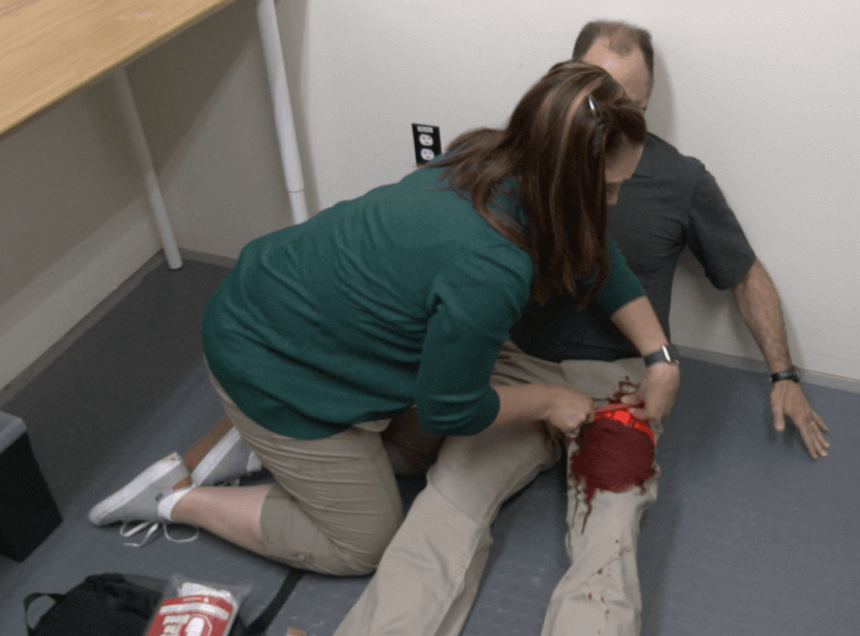
In basic boating seamanship, there are a couple of primary rules and one is: Keep the water out. Dr. Shertz's class on Tactical Casualty Care could be nicknamed: Keep the blood in. Dr. Shertz is a dynamic and crisp instructor and compelling educator. I unlearned years of Hollywood war movie myths on what a bullet does to the body and learned what really happens when a person (or gelatin) gets shot.Most importantly I learned what I could do to help 'keep the blood in' and how to go about that to a reasonable degree. Both the classroom and hands-on instruction were thorough and I recommend the class to anyone who wants to become more educated in tactical casualty care, or wants to possibly be of use if found in a direct or indirect threat event with casualties and minimal equipment.

TAKE THE CLASS!
Years ago, I made sure I had the latest C.A.T. tourniquet to put in my trauma kit but only recently did I learn how to use it. I've always taken pride in being well prepared on having a complete first aid kit but not knowing how to use everything is not to bright. I took a Stop the Bleed class and became energized to learn more. Later on, I watched the video "Until Help Arrives" (FEMA) which added to a good basic skill set on hemorrhage control. But after I went through Crisis Medicine's Tactical Casualty Care (TC2) I feel like I'm a part of my local EMS community by being an “Active Bystander”. Today I have confidence and empowerment as I'm hiking, working outside, doing errands, or if come across a violent incident...doing something is better than nothing! I keep my new Trauma Management Kit (as I call it) next to me in my car or on my pack because every second counts.
THESE PRESENTATIONS ALMOST MAKE IT FEEL LIKE YOU ARE THERE.
No matter if the injury is caused by accident, nature, or violent perpetrator, it is important that one is capable of being your own first responder. We can make a difference during the time before more highly trained and equipped help arrives.This course adds a lot of important information, skills, and mindset that may are not provided in a more traditional first aid/CPR course. The lectures, slides, videos, and demonstrations are well balanced and provide a comprehensive understanding of each topic and skill set. I know it is most ideal to work through these skills in person but these presentations almost make it feel like you are there. I also appreciate Dr. Shertz's candor, humor, and unbiased discussion and evaluation of the many products and techniques that are presented.
THE DETAIL, STRESS INOCULATION AND REAL-WORLD APPLICABILITY GAVE ME CONFIDENCE THAT I CAN HANDLE SITUATIONS
Most of my life I lived in a safe bubble. I practiced martial arts and self-defence but never learned any medicine for TECC/TCCC environments. I moved and quickly learned that anything could happen, anywhere, at anytime, and if I wasn't prepared, I would totally be a liability. I took TC2 and I'm working my way through K9 TC2 and CRBN. The detail, stress inoculation and real-world applicability gave me confidence that I can handle situations much more intense than I ever thought. It was insanely informative, honestly fun, and entertaining. I now trust the skills I've learned can safe my life, as well as my friends and family. I know the images and stories I've seen will prepare me for situations where others would freeze. The whole Crisis Medicine team went above and beyond in helping me learn and feel a part of the community. Looking forward to more training in the future.
HIGHLY RESEARCHED, PACKED WITH EXAMPLES, AND DELIVERED WITH TOP-NOTCH PRODUCTION QUALITY…
Tactical Casualty Care is the holy grail in training. Mike Shertz expertly distills his decades of experience as a Special Forces Medic and as an Emergency Medicine Physician into a powerfu,l fact-filled training that leaves you confident knowing what to do in an active violent event. Mike cuts through urban legends and misinformation and shows, through research and real-life situations, what works and what doesn’t.Mike has seen it, done it, and knows how to share it in a powerful presentation style that sticks. Everyone can benefit from this important information. Highly researched, packed with examples, and delivered with top-notch production quality, this online course will give you skills that can mean the difference between life and death for someone you love or anyone you may encounter who needs crisis first aid
…THE ONLINE TRAINING AND STEP-BY-STEP SKILLS STATIONS ARE EVERY BIT AS EFFECTIVE AT DRIVING HOME THE MATERIAL AS THE IN-PERSON TRAINING
Transformational! Crisis Medicine’s Complete Tactical Emergency Casualty Care course has been one of the most transformational experiences in my life. Dr. Shertz's practical, no-bullshit approach to triage and treatment of life-threatening trauma has been distilled down to skills and techniques that are very trainable, attainable, and applicable.After this course I am confident in my ability to identify, treat, and manage mass casualties in any active violent event. I can build an aid system using equipment that has been researched, tested, and proven to work - and that won't fail during a crisis.
Having taken both the in-person and online training, the online training and step-by-step skills stations are every bit as effective at driving home the material as the in-person, and track very closely with the classroom experience. In some cases, the on-line training is actually a superior way to learn the material, as you can review or pause and ponder a graph or chart. Although hands-on classroom experience is undeniably beneficial, the online course will still get your knowledge and mindset where it needs to be for you to act as an effective force multiplier for good.
CLEAR, FEASIBLE, CONTAINS GREAT MATERIAL, AND TEACHES A LIFETIME SKILL SET
I am a 56-year-old New Yorker, having this type of skill is useful not only for me and my family, but also for others in need.Finally learning something useful and potentially helpful to the community at large for any number of circumstances is an intelligent thing to do. Further in NY in normal times you could expect a 4 minute to 15 minute response time by trained pros. The skills I learned from CM could very well be the difference between life and death.
To anyone out there considering this course, do not buy the equipment first and take the course second. You’ll save yourself a lot of cash by doing it the other way around and learning what gear you need. Also, you will only need the equipment you are trained on. Training first, equip yourself second. The course is clear, feasible, contains great material, and is a lifetime skill set I wish I would have thought of acquiring many years ago. Give this to your kids as a present as soon as you feel they can take it!

THIS RANKS IN THE TOP CLASSES I HAVE TAKEN. MAYBE THE BEST. EXCEPTIONALLY WELL DONE!
I just completed the [online] TC2 course and thought I'd drop you a note and let you know how much I liked the course. Actually loved the course! I am a CPA and over the years have done a ton of CPE to maintain my certification and this ranks in the top classes I have taken. Maybe the best. Exceptionally well done! Thank you for providing this material. I hope I never have to use it, but as with CPR, you never know. I have had to use CPR a couple of times, so I'll sleep better after taking this course should I ever be in a situation where these skills are needed.