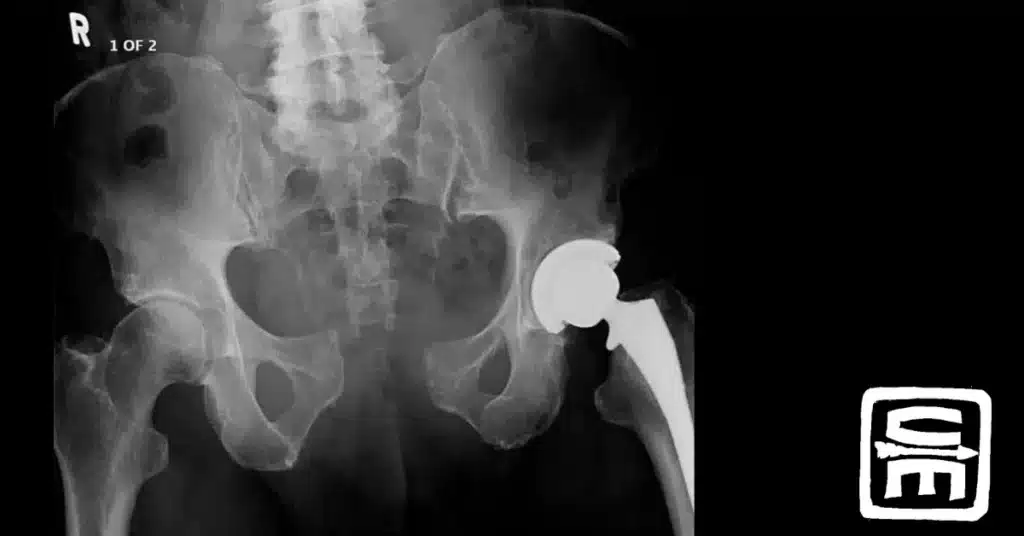

“Pelvic fractures are common in combat injuries and may be highly lethal. Twenty-six percent of service members who died during OIF and OEF had a pelvic fracture.” 1 This led to the TCCC committee adding pelvic binders to their guidelines …

The easy to remember mnemonic MARCH reminds us of the priorities in treating casualties during TECC and TCCC situations. MARCH provides a framework to address immediate life threats and gives an organized approach to begin a casualty evaluation. The MARCH mnemonic is preferable to the ABCDE model because it takes into consideration the reason you need an airway and to be breathing is to circulate blood to the casualty’s brain. Recognizing that, the first step in our casualty evaluation should be to look for massive hemorrhage.
Once past massive hemorrhage, A-R-C is loosely approximated by A-B-C. H- is a reminder that a large number of traumatic casualties arrive at the emergency department or medical treatment facility hypothermic which dramatically increases their death rate.
The MARCH mnemonic can be applied to any patient, as the initial casualty evaluation usually rules out massive hemorrhage.
“Pelvic fractures are common in combat injuries and may be highly lethal. Twenty-six percent of service members who died during OIF and OEF had a pelvic fracture.” 1 This led to the TCCC committee adding pelvic binders to their guidelines …

Video used with permission by Andrew Dennis, DO FACS, FACOS, Cook County Trauma Burn Unit, Chicago Il 🕖 Reading Time, 6 minutes Sucking chest wounds are dramatic, but rarely life-threatening. The sound of sucking & blowing is the sound of not dying …

🕖 Reading Time, 6 minutes Recently we posted a video outlining the challenges of using hemostatic granules as compared to gauze. In response, we were surprised by how many people advocated for tactical tampons to control massive hemorrhage in a …

🕖 Reading Time, 1 minutes We recently discovered “active shooter kits” being marketed to agencies and schools containing granular hemostatic agents. Granular or powdered hemostatic agents fell out of favor over ten years ago as they “wash out” of actively …

Although an IFAK is technically an Individual First Aid Kit, it should more appropriately be thought of as an Individual Trauma Kit. 🕖 Reading Time, 4 minutes First Aid kits and First Aid courses, as most people commonly think of …

🕖 Reading Time, 4 minutes Critics of improvised tourniquets say they are ineffective. Some claim, “if you’re planning to improvise, you’re planning to fail.” We disagree with this statement. Proper planning includes having a primary plan, in this instance a …